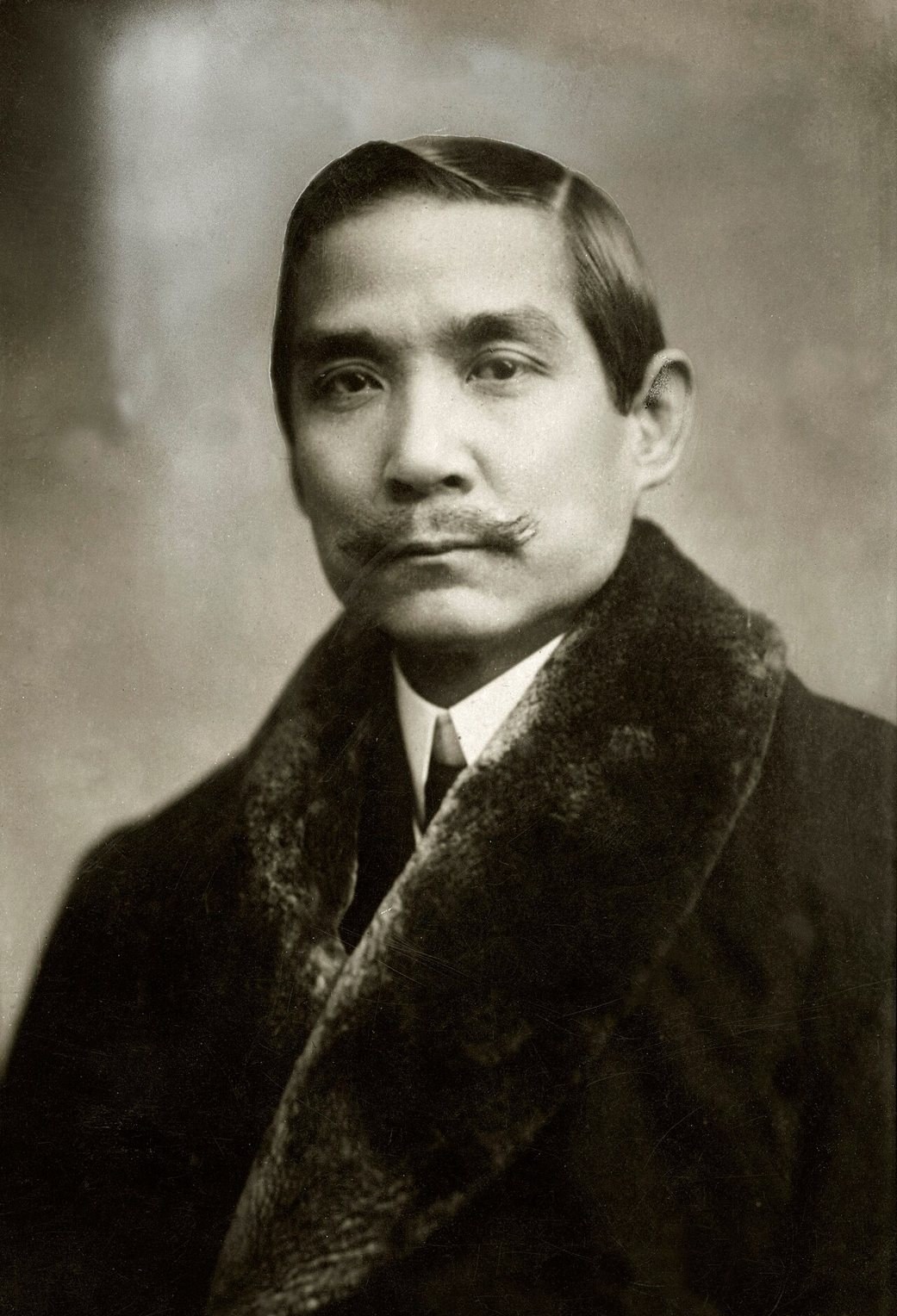
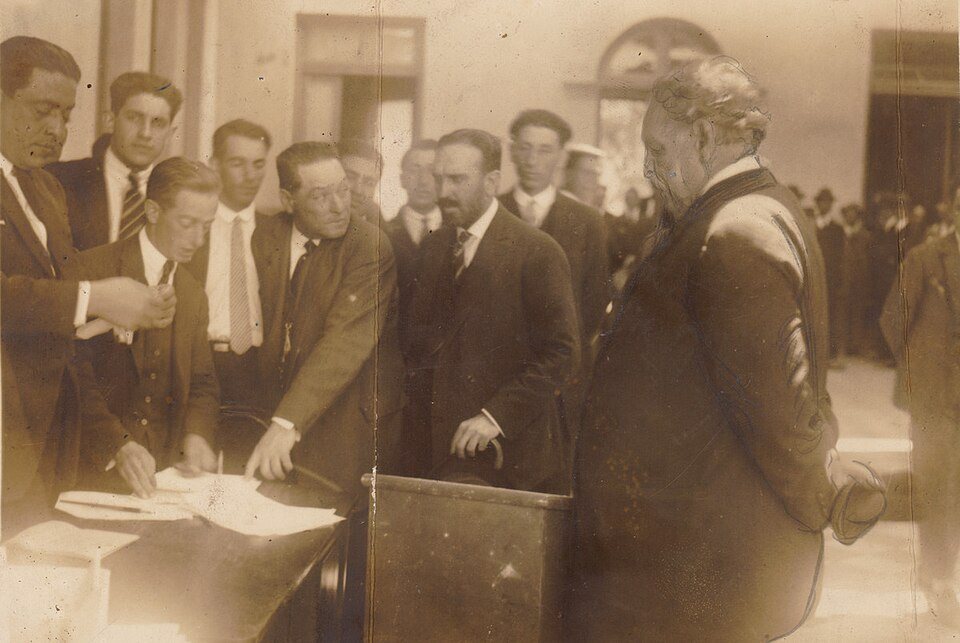
Photo: unknown photographer, undated portrait of Sun Yat-sen, public domain, via Wikimedia Commons
On the morning of Sunday 11 October 1896, a 29-year-old doctor from southern China was walking along Portland Place in the West End of London, on his way, he said later, to church with his old teacher. He passed number 49. A few minutes afterwards he was on the far side of its front door, and the door was locked behind him.
Number 49 was the legation of the Qing empire. The man was Sun Yat-sen, and a year earlier he had helped plan a failed uprising in Guangzhou. The Qing government had a price on his head. He stayed inside the building for twelve days, while the people who held him worked out how to get him back to China.
Sun would have turned 160 on Thursday. Hong Kong marked the day with a ceremony at Sun Yat Sen Memorial Park led by the Chief Executive, John Lee, and a new exhibition at the Dr Sun Yat-sen Museum opens to the public today. A forum in Taipei marked it earlier in the month. Both sides of the Taiwan Strait still claim him, which is quite an achievement for a man who spent most of his life in exile. The London episode is a good part of the reason the world had heard of him at all.
A wanted man in the West End
Sun had trained in medicine in Hong Kong, at the College of Medicine for Chinese, where one of his teachers was a Scottish surgeon called James Cantlie. After the Guangzhou plot collapsed in October 1895 he fled, first to Japan and then across the Pacific to Hawaii and the United States, raising money among overseas Chinese communities as he went. He landed in Liverpool on 1 October 1896 and took the train to London.
Cantlie had moved back to London by then and lived at Devonshire Street, a short walk from Portland Place. Sun called on him almost at once. Cantlie's version of events has him joking that Sun should stay away from the Chinese legation around the corner. It is the kind of line that reads better after the fact, but both men told it.
Inside number 49
How Sun got through the door is the part nobody agrees on. In his own account, published the following year as a short book called Kidnapped in London, he was approached in the street by a Chinese man who chatted with him in Cantonese, was joined by others, and was more or less steered up the steps and inside. The legation always said he had walked in of his own accord, and had in fact visited the day before under a false name, which is at least possible. Several historians have since argued that Sun went in on purpose, to look at the enemy or to provoke exactly the scandal that followed. I have read the arguments on both sides and I still can't tell you which is right. It may have been some of each.
What is not disputed is what happened next. He was taken to a room on an upper floor and kept there. The man running things was not the minister, Gong Zhaoyuan, but the legation's long-serving English secretary, Sir Halliday Macartney, a Scot who had spent decades in Qing service. The plan, as it emerged later, was to charter a ship and take Sun back to China, passing him off as a lunatic so that nobody on board would ask questions. In China he would very likely have been executed.
Notes from a window
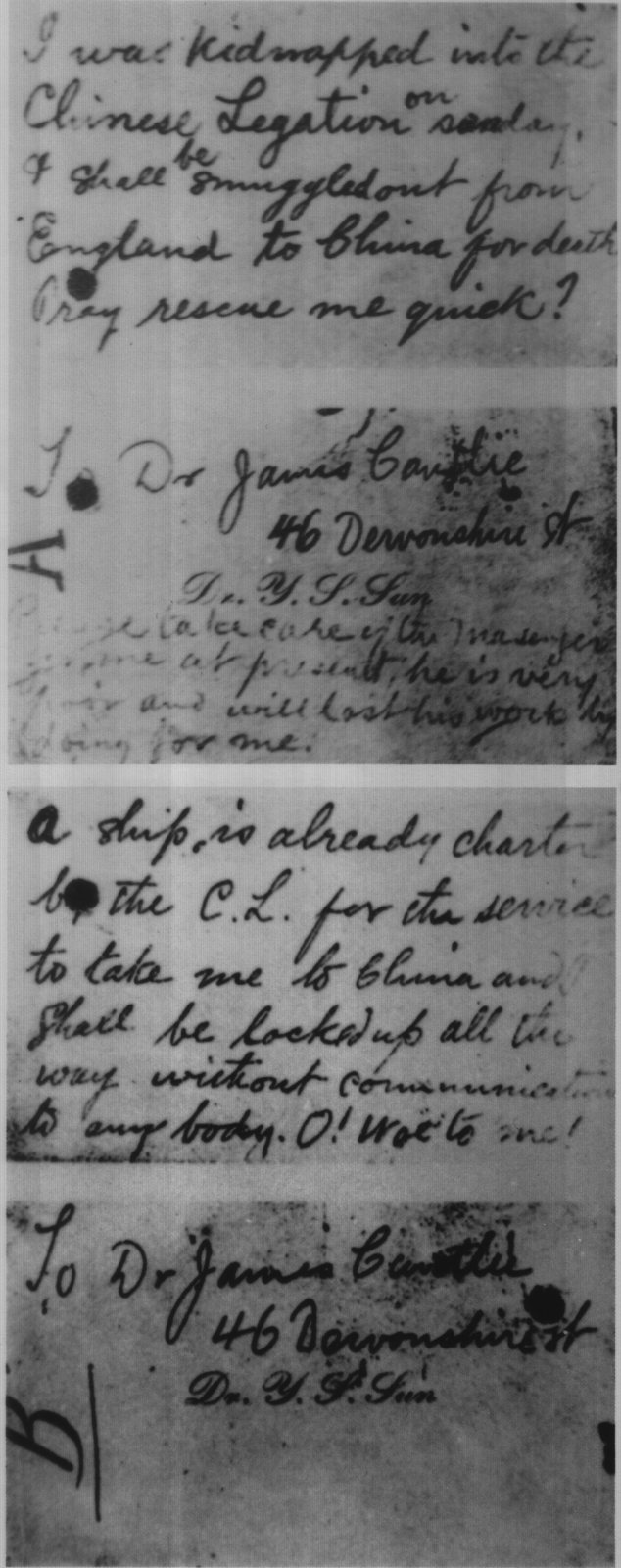
Sun Yat-sen's two handwritten cards to James Cantlie, addressed to 46 Devonshire Street, asking to be rescued from the Chinese legation. Public domain, via Wikimedia Commons
Sun tried the obvious things first. He wrote messages and threw them out of the window, weighted with coins. They landed on the leads of neighbouring roofs or were picked up by legation staff. He appealed to the English servants who brought his meals, and one of them, a porter named George Cole, eventually agreed to help, after some days and, by most accounts, some prompting from home.
The prompting came from the housekeeper, a Mrs Howe. On the night of Saturday 17 October she pushed an unsigned note through Cantlie's letterbox saying that a friend of his had been held in the legation since the previous Sunday and that they meant to send him to China. Cole carried Sun's own cards to Cantlie soon afterwards. They survive, in a hurried hand, and one says plainly that he had been kidnapped into the Chinese legation on Sunday and would be smuggled out of England to China "for death". Another adds that a ship had already been chartered to take him. Cantlie went straight to the police, who at first did not believe him, and then to the Foreign Office. He also brought in Patrick Manson, another of Sun's old teachers from Hong Kong, and between them they paid a private detective agency to watch the building around the clock so that Sun could not be moved out quietly.
The Globe gets the story
The Foreign Office took it seriously once it had sworn statements in hand, and Lord Salisbury's government let the legation know that holding a man prisoner in the middle of London was not covered by diplomatic courtesy. What really ended it, though, was the press. On 22 October the evening paper The Globe ran the story, and by the next morning reporters were camped outside number 49 with a crowd behind them.
Sun was released on the afternoon of 23 October and walked out to Cantlie and a Scotland Yard inspector. Newspapers wanted interviews and he gave them freely. Within a few months Kidnapped in London was in print, in English, with his name on the cover, and a little-known revolutionary had become the most famous Chinese dissident in the English-speaking world. He celebrated his 30th birthday a little under three weeks after getting out.
He stayed in London until the following summer and spent much of that time in the Reading Room of the British Museum, reading political economy and whatever else he could get his hands on. His biographers usually date the beginnings of his Three Principles of the People, nationalism, democracy and the people's livelihood, to those months. For a legation that had wanted him quiet, it was about the worst outcome available. Macartney kept his job. Cantlie stayed a friend for life, and in 1912 published a book about Sun and the revolution, co-written with a journalist, C. Sheridan Jones.
It took fifteen more years and several more failed uprisings before the Qing dynasty fell in 1911. Sun was in Denver when it began, reading about it in the papers.
Portland Place today
The legation became an embassy and never moved. The People's Republic of China still has its embassy at 49 Portland Place, behind a row of tall Georgian fronts that look much as they did in 1896, a few minutes' walk from Regent's Park. Cantlie's old street is round the corner. In the photographs of the building I have seen, nothing on its front mentions the guest of October 1896.
Enjoyed this story?Get a new one every day on social.