Photo: ANEFO, Nationaal Archief, CC0, via Wikimedia Commons
35,974. That was the crowd at Stoke City's Victoria Ground on 24 October 1961 for a Second Division game against Huddersfield Town, more than three times the previous home gate. Nobody had come for Huddersfield. They had come to see a man who would turn 47 that winter.
On Saturday Ronaldinho, 46, played the first half for Ravenna in Italy's third tier, a 2-0 derby win over Forlì, his first competitive match since he left Fluminense in 2015. He signed in June and has since bought a stake in the club. It is a lovely, slightly mad thing to happen in Romagna in November, and it has a precedent in the English Potteries that went further than anyone expected.
The fee was £3,500
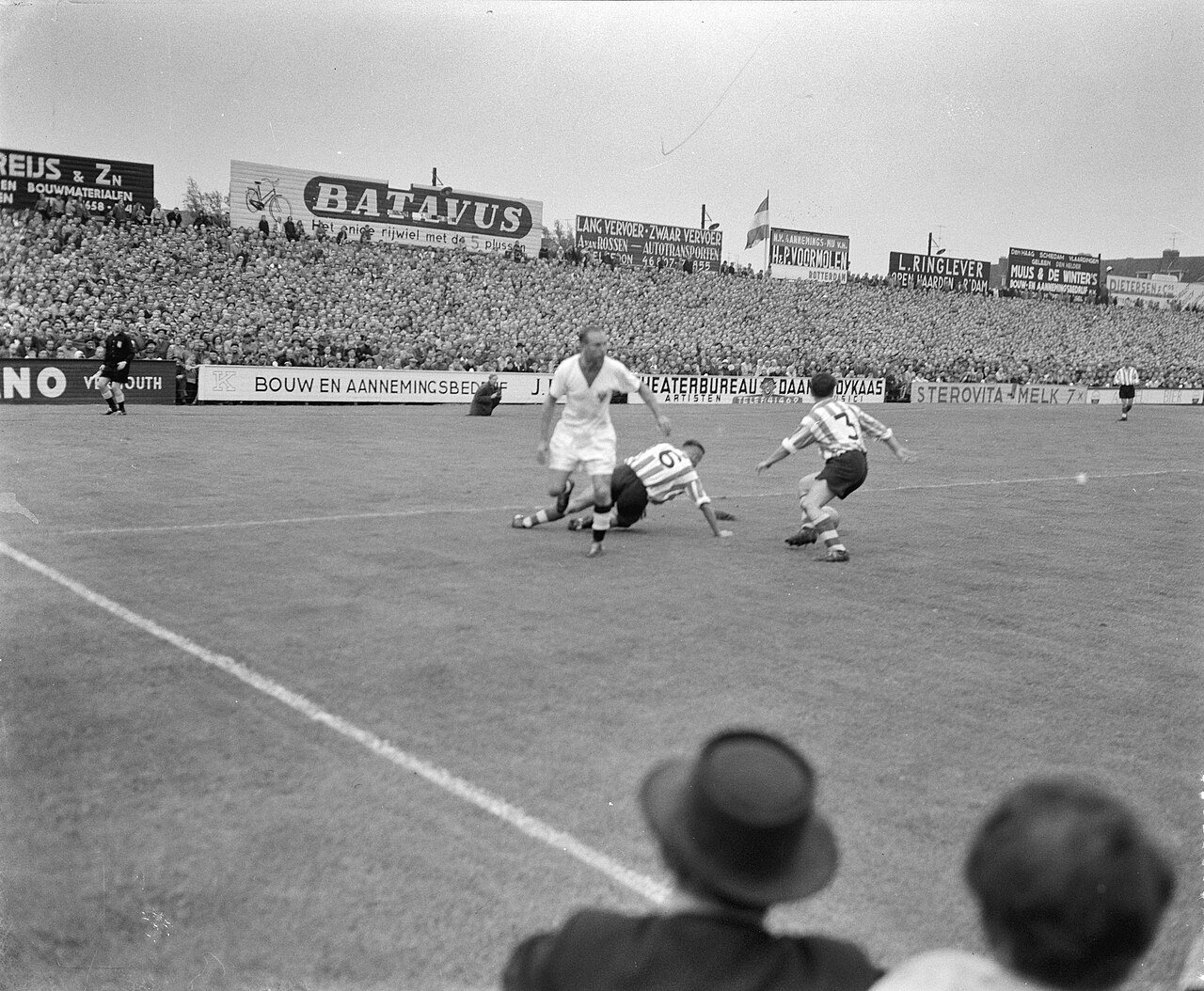
Blackpool playing Sparta in Rotterdam, with Stanley Matthews in the Blackpool side. Photo: Herbert Behrens / ANEFO, CC0, via Wikimedia Commons
Stanley Matthews was born in Hanley, one of the six towns that make up Stoke-on-Trent, in February 1915, and had started at Stoke as a teenager. In 1947 he left for Blackpool after a long falling-out with the club. There he won the 1953 FA Cup final, the one still called the Matthews Final (Blackpool came back from 3-1 down to beat Bolton 4-3, Stan Mortensen scored three, and Matthews spent the rest of his life saying it was Mortensen's game). In 1956 he was voted the first European Footballer of the Year, edging Alfredo Di Stéfano by 47 votes to 44.
By 1961 he was 46, still at Blackpool and still picked. Stoke were a dull Second Division side drawing small crowds, and their young manager, Tony Waddington, wanted a draw card. Blackpool asked £3,500. Stoke paid it, and offered Matthews two years at £50 a week, double his Blackpool wage. The signing went out live on the BBC's Sportsview, which tells you what the country thought of it.
"Welcome home, Stan," Waddington is reported to have said. "For years this club has been going nowhere. Now we're on our way."
A gimmick that won the division
Matthews set up a goal in the 3-0 win over Huddersfield. More surprising, he stayed in the team. In 1962-63 Stoke won the Second Division, clinching it with a 2-0 home win over Luton Town in which Matthews, by then 48, scored his only goal of the season. The Football Writers' Association made him Footballer of the Year for the second time, fifteen years after the first. Nobody that old had won it before, and nobody has since.
How he managed it was not much of a secret. He trained every day of his adult life, never smoked, cut red meat out of his diet in the early 1950s, ate a lot of salad and fruit, and went without food on Mondays. "I had some very good advice," he said of the diet, "and every Monday I had no food." His daughter later said he used to walk to the ground with lead in his shoes so his boots would feel light. (I have no idea whether that works, and I am not about to find out.)
Knighted while still on the books
On 1 January 1965 he became Sir Stanley, the only footballer ever knighted while still playing. Five weeks later, on 6 February, he played for Stoke against Fulham in the First Division, a 3-1 win. He was 50 years and five days old. No one older has played in England's top flight.
His farewell, on 28 April 1965 at the Victoria Ground, was a match between "Stan's XI" and an International XI that included Ferenc Puskás, Di Stéfano, Josef Masopust and Lev Yashin. The internationals won 6-4, and at the end Puskás and Yashin carried him off on their shoulders.
After the boots came off
Matthews did not entirely stop. He managed Port Vale for a few years, coached in Malta and spent long stretches in South Africa running football clinics, and kept turning out in the odd game for years afterwards. He moved back to Stoke-on-Trent with his wife Mila in 1989 and became the club's president.
When he died in February 2000, aged 85, more than 100,000 people lined the streets of Stoke for the funeral procession. His ashes were buried beneath the centre circle of the club's stadium, which seems about right for a man the town had already paid £3,500 to bring home once.
Forty-five minutes in Ravenna
It would be unkind to Ronaldinho to hold him to all that. He has been away from the game for eleven years, not playing every week the way Matthews was, and Ravenna is a third-division club with a famous minority shareholder, not a promotion side built around him. Saturday was the first half of one derby. My own view is that he has already done the part that mattered to Stoke in 1961, which was to make a lot of people buy a ticket for a match they would otherwise have missed.
Enjoyed this story?Get a new one every day on social.