Photo: Taiwankengo, CC BY-SA 4.0, via Wikimedia Commons
The number to watch in Taiwan on Saturday is 5,000,959. That is a quarter of the 20,003,835 people eligible to vote in the nuclear referendum held alongside the island's "nine-in-one" local elections on 28 November, and it is how many "yes" votes the measure needs, on top of beating the "no" side, to pass. The question, drafted by the Kuomintang's legislative caucus and adopted by the Legislative Yuan 59 to 51 in August, asks whether voters support the government using nuclear power to boost the economy and abolishing the "nuclear-free homeland" energy policy.
Polls close at 4 p.m. local time, with more than 11,000 local posts also on the ballot, including the mayoralties of Taipei and Kaohsiung, and the referendum count is expected to come in on Saturday evening, a little after the local results. Even a clear win would not change the law. Su Yen-tu of Academia Sinica told the Taipei Times the vote is "essentially advisory" and "not legally binding." Taiwan has had no nuclear generation at all since 17 May 2025, when the second reactor at Maanshan, the last one running, was switched off. President Lai Ching-te has said the government would evaluate restarting Maanshan and the Kuosheng plant if safety, waste and public-consensus conditions are met; his party has urged a "no."
The vote that won and changed nothing
This is Taiwan's fourth nuclear referendum since 2018, and the first one explains why the legal small print matters so much.
In 2017 Tsai Ing-wen's government wrote the phase-out into Article 95 of the Electricity Act: every nuclear plant was to stop operating by 2025. On 24 November 2018, on another local election day, a citizens' initiative asked voters to delete that sentence. About 5.89 million people said yes, a clear majority and well over the threshold, and the deadline lapsed from the statute on 2 December 2018.
Then nothing much happened. The Tsai government said its energy policy had not changed, and it did not need to: removing a deadline from a law is not the same as ordering anyone to keep a reactor running. The plants were allowed to reach the end of their operating licences one by one, without renewal. Kuosheng's last unit stopped in 2023 and Maanshan's in May 2025, on almost exactly the schedule the deleted sentence had set. (I find it hard to think of a cleaner example of a referendum being won on paper and lost in practice.)
Lungmen, the plant that never ran
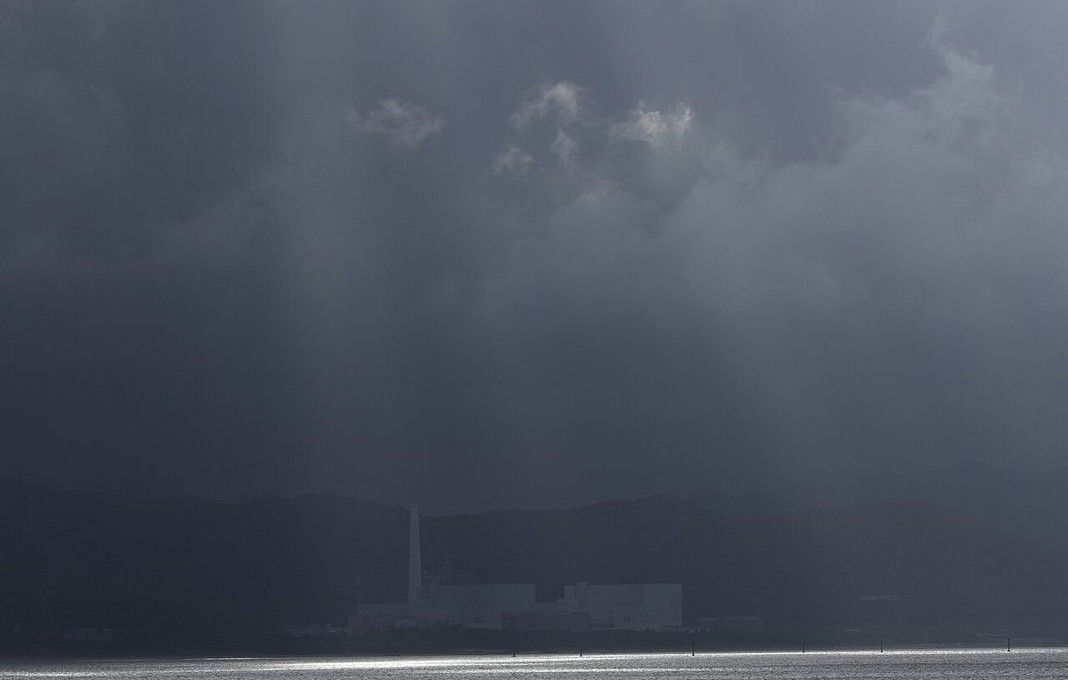
The other ghost in this vote sits on the coast at Gongliao, in New Taipei. The Lungmen plant, often called the Fourth Nuclear Power Plant, was Taiwan's longest political argument in concrete. Construction began in 1999. In October 2000 the new DPP government of Chen Shui-bian halted it, the Kuomintang-led legislature fought back, and after a ruling from the Council of Grand Justices work resumed in 2001.
By 2014 the plant was close to finished and deeply unpopular, especially after Fukushima. In April that year Lin Yi-hsiung, a former DPP chairman, began an open-ended hunger strike. Within days tens of thousands of protesters filled central Taipei, and police used water cannon to clear a main road. On 27 April 2014 President Ma Ying-jeou's government, which had backed the plant, announced that the first reactor would be sealed after safety checks and work on the second would stop. The fuel assemblies were later shipped back to the United States.
Two more votes that went nowhere
A December 2021 referendum asked voters to restart Lungmen. It failed, with "no" ahead by roughly 450,000 votes. Last year's vote on keeping Maanshan open did the opposite: 4.34 million yes against 1.51 million no, about three to one, and it still failed, because turnout was 29.5% and the yes total fell about 660,000 short of the quarter-of-the-electorate bar.
What the history says about Saturday
Put the four votes side by side and a pattern shows. Taiwanese voters have usually been more open to nuclear power than their governments, and every time the result has had less force than the campaign implied. The 2018 win removed a date but not a policy. The 2025 landslide removed nothing because of a turnout rule. Saturday's question is written as a policy vote rather than a repeal, which by Su's reading means a pass would oblige the government to act but could not strike the nuclear-free clauses that remain in the Basic Environment Act and the Climate Change Response Act. The Kuomintang and its Taiwan People's Party allies, who hold a majority in the legislature, could amend those laws directly, which is what the DPP's Chen Pei-yu argued they should have done instead of spending some NT$800 million on a referendum.
Whatever the count says tonight, the restart decisions will be made by regulators and Taipower over years, not in a polling station. The World Nuclear Association expects independent safety inspections at Maanshan to take 18 to 24 months, putting any power from it around 2028.
Lungmen, meanwhile, is still standing on the Gongliao shore, sealed and empty, with no fuel inside, a dozen years after Lin Yi-hsiung stopped eating.
Enjoyed this story?Get a new one every day on social.