Photo: Petar Milošević, CC BY-SA 4.0, via Wikimedia Commons
Thirty thousand people, by the most commonly quoted figure, were killed in one afternoon in a sports stadium in January 532. The stadium was the Hippodrome of Constantinople, the troops were the emperor's, and the emperor was Justinian, who a few hours earlier had been ready to get on a ship and leave. The person who stopped him was his wife.
Theodora had been an actress, which in sixth-century Constantinople was not a respectable profession, and her father had kept the bears for one of the chariot-racing factions. Justinian's uncle, the emperor Justin, had changed the law so that a senator could marry a woman like that. She was crowned beside her husband in April 527. Five years later she made the one decision for which she is remembered, and the historian who recorded it, Procopius, disliked her so much that he later wrote a secret book attacking her. That he still gave her the credit tells you something.
Seven men and a broken rope
The riots began with a hanging that went wrong. The Blues and the Greens, the two chariot-racing factions, were part sports club and part street gang, and the emperor himself was a Blue. On 10 January the city prefect sentenced seven faction members to death for murders committed in an earlier brawl. The scaffold broke, twice. Two of the condemned, one Blue and one Green, survived the fall, and monks carried them to sanctuary in a church, where the prefect's guards surrounded them.
For three days both factions petitioned the emperor to spare the two men. On Tuesday 13 January, at the races, the crowd shouted for mercy through twenty-two heats and got no answer. Then the Blues and Greens, who normally fought each other, began chanting the same word together: Nika, win, the cry they usually aimed at their drivers. They aimed it at Justinian instead, stormed the prefect's headquarters, freed the prisoners and set the building on fire.
Over the next five days the fire took the Senate house, the great baths, the colonnaded main street, part of the palace gates and the cathedral of Hagia Sophia. On 14 January Justinian sacked his most hated ministers, and it made no difference. On Sunday 18 January the mob crowned Hypatius, a nephew of the emperor before last, with a gold chain in the Forum of Constantine and carried him to the imperial box in the Hippodrome.
The ships in the harbour
Justinian, in the palace, was by Procopius's account preparing to run. The palace had its own harbour, ships were being readied, and the council was discussing which port on the Asian shore to make for. It was at that meeting that Theodora spoke.
Procopius gives her words at length, though no one should imagine he had a stenographer in the room. Anyone born had to die, she said, but an emperor who had reigned could not bear to become a fugitive. The ships were there, and the gold, and the sea; if he wanted to save himself, nothing stood in his way. "But consider," she went on, "whether, once you have escaped, you will not gladly exchange safety for death. As for me, I hold with the old saying, that the purple is a fine burial shroud."
Historians have argued for a century about whether anything like this was said. Procopius wrote twenty years later, the speech is built like a piece of classical rhetoric, and some scholars think the flight plan was a feint to draw the rioters into the Hippodrome. I find the simpler reading more convincing: a frightened man, a council that had lost its nerve, and one person in the room who had grown up in the Hippodrome crowd and knew it could be beaten. Either way, the ships stayed tied up.
Thirty thousand in the Hippodrome
What followed was planned in an hour. The eunuch Narses went into the Hippodrome with a bag of gold and reminded the Blue leaders that Justinian was one of them and Hypatius a Green sympathiser; some of the Blues drifted out. Then the generals Belisarius and Mundus brought their troops in through two separate gates and blocked the exits.
Procopius says more than thirty thousand people died there that afternoon; another chronicler says thirty-five thousand. Hypatius was dragged from the box, protesting that he had been crowned against his will, which was probably true. Justinian was inclined to spare him; those around him, the sources say, were not. He and his brother were executed the next day and their bodies thrown into the sea.
What Justinian built on the ashes
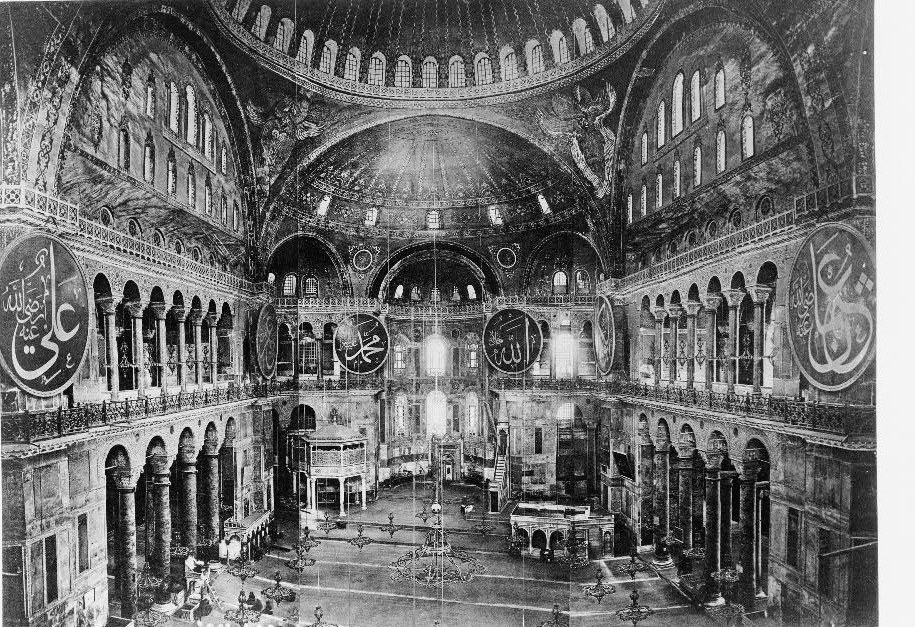
The interior of Hagia Sophia, photographed between 1860 and 1890. Photo: Library of Congress Prints & Photographs Division, no known restrictions
Within six weeks, on 23 February 532, work began on a new Hagia Sophia on the burned site. Its architects, Anthemius of Tralles and Isidore of Miletus, gave him a dome over a hundred feet across, carried on four arches over a square hall, which nobody had built at that scale before. The church was consecrated in December 537.
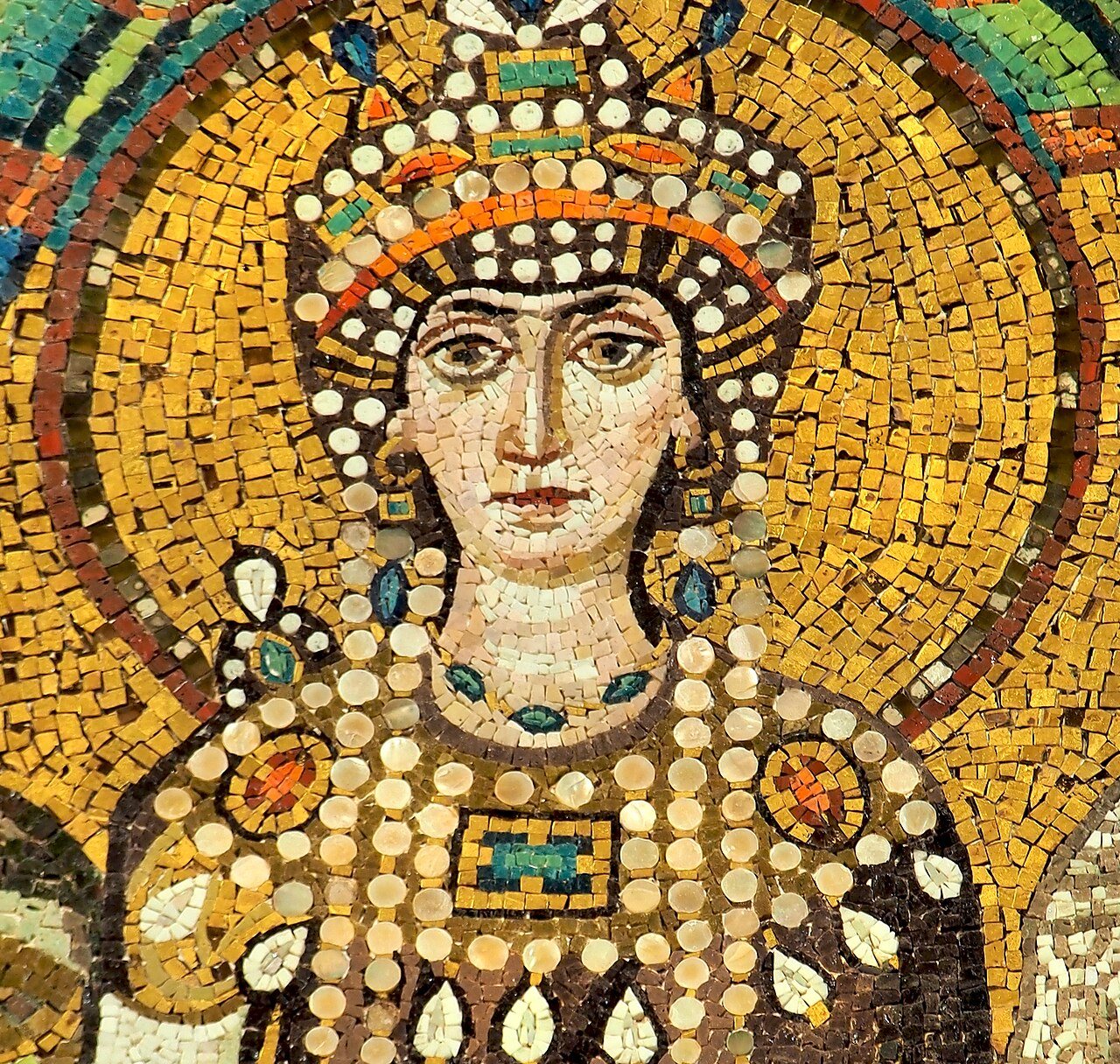
Theodora reigned another sixteen years and died in 548, most likely of cancer. The portrait of her that survives is the mosaic at San Vitale in Ravenna, made around the year she died by craftsmen who had almost certainly never seen her, in a city she never visited. Hagia Sophia stands, a mosque again since 2020, with its dome under restoration this year and its doors open to worshippers and visitors.
My own view is that the massacre is the part of the story Justinian's admirers prefer not to dwell on, and the speech is the part his critics cannot explain away, and that both belong to the same afternoon.
Enjoyed this story?Get a new one every day on social.