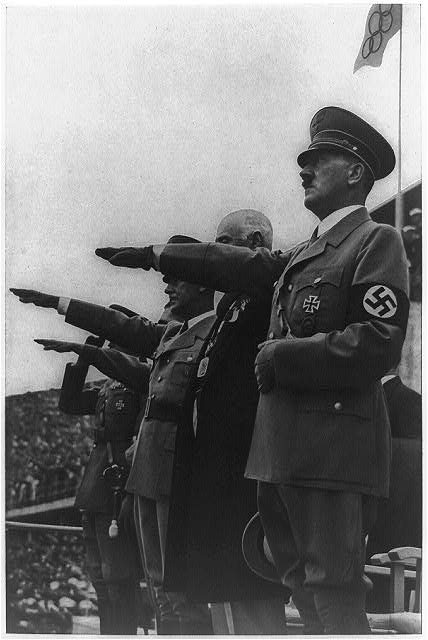
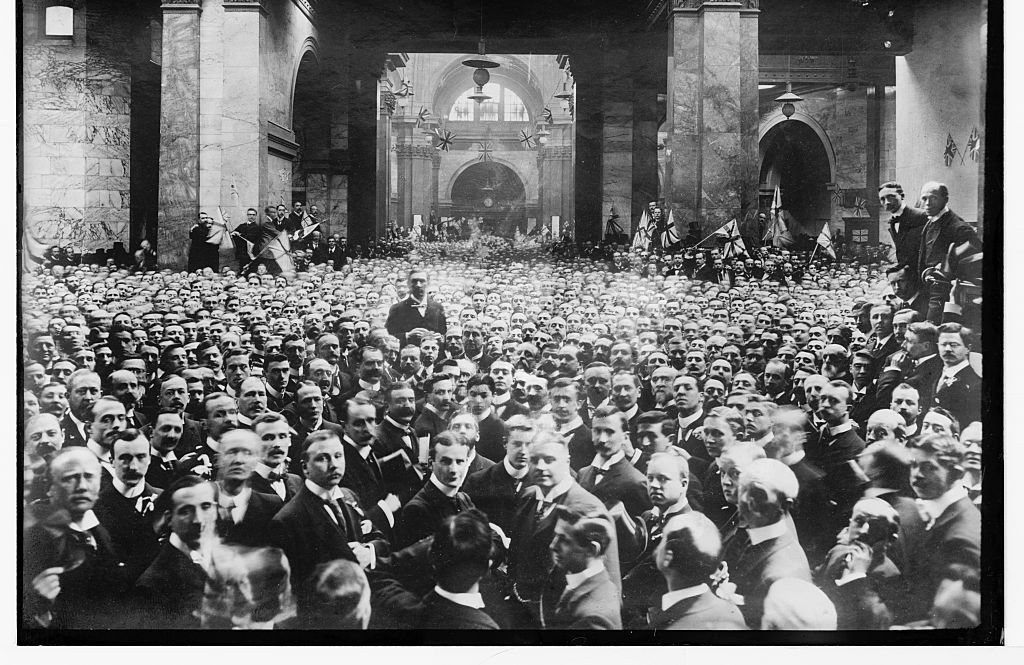
Photograph, 1936, Library of Congress Prints & Photographs Division, no known restrictions
Exactly one government in the 125-year history of the Nobel Peace Prize has ordered its citizens never to accept it. That was Germany, by a decree Adolf Hitler signed on 30 January 1937, and the cause was a sick magazine editor named Carl von Ossietzky, who had been in a concentration camp when the Norwegian committee gave him the prize and was in a Berlin hospital under police guard when he was supposed to collect it.
It is worth setting next to this month's news. On 9 October the committee in Oslo gave the 2026 prize to Navi Pillay, the 85-year-old South African judge and former United Nations human rights chief. That evening, at a rally in Syracuse, New York, Donald Trump called the decision "an indelible stain on the country of Norway", said the prize had been "forever discredited by a handful of radical ideologues", and added: "And we will not forget, Norway." At another rally, in Port Huron, Michigan, on Sunday, he said he did not want Norwegians coming to the United States because he had not got the prize. Norway's foreign minister, Espen Barth Eide, told the broadcaster NRK on Monday that the president "knows very well that the Nobel Committee is independent." He and his prime minister have said versions of that sentence several times this year. The last time Norway had to repeat it this often was the winter of 1936.
An editor who printed what the army was hiding
Ossietzky was not a famous man outside Germany. He edited Die Weltbühne, a small Berlin weekly with a sharp tongue and a circulation of a few thousand, and in 1929 it published an article showing that the German army was secretly building an air force in breach of the Versailles treaty. The government prosecuted the magazine for treason. In November 1931 Ossietzky was sentenced to eighteen months, served part of it in Tegel prison, and was released in a Christmas amnesty in 1932. Friends told him to leave the country. He said an editor who ran away from his own newspaper was no use to anyone, and stayed.
On the night of 28 February 1933, the night after the Reichstag fire, the police came for him. He went first to Spandau, then to the Sonnenburg camp, then in 1934 to Esterwegen, one of the moor camps in Emsland where prisoners dug peat. A Swiss Red Cross delegate, Carl Jacob Burckhardt, was allowed to see him there in the autumn of 1935 and described a trembling, deathly pale man with one eye swollen shut and teeth missing, who whispered that he wanted peace and had little hope of getting it. That description, carried back to Geneva, is roughly where the campaign began.
The campaign in Oslo, and the men who left the room
The idea of giving Ossietzky the Peace Prize came from German exiles in Paris, and much of the work in Norway was done by a young social democrat from Lübeck who had fled to Oslo under a false name and would be chancellor of West Germany thirty years later, Willy Brandt. Nominations came in from Einstein, Thomas Mann, Jane Addams and members of parliament in several countries. The Norwegian novelist Knut Hamsun wrote publicly against it, which cost him friends and did not stop it.
The committee stalled. In 1935 it held the prize over, which was widely read as a refusal to pick a fight with Berlin. Then on 23 November 1936 it announced two prizes at once: the 1936 prize to the Argentine foreign minister Carlos Saavedra Lamas, for brokering peace in the Chaco War, and the held-over 1935 prize to Carl von Ossietzky. Two members of the five-man committee had withdrawn beforehand so that the decision could not be pinned on the Norwegian state: the sitting foreign minister, Halvdan Koht, and the former prime minister Johan Ludwig Mowinckel. The claim that the prize had nothing to do with the government was being tested for the first time, and the government did what it could to keep it standing. King Haakon VII stayed away from the ceremony on 10 December, which he did not normally do.
Berlin's answer
Hermann Göring summoned Ossietzky, who by then had been moved from the camp to a hospital in Berlin with tuberculosis, and told him to turn the prize down. He refused. The German press was told to treat the award as an insult to the nation, and Norway was warned that relations would suffer. Ossietzky was not permitted to travel to Oslo. The prize money, about 100,000 Reichsmarks, was paid into an account in Germany, and his lawyer, Kurt Wannow, stole most of it; Wannow was later jailed, one of the few satisfying footnotes in the affair.
Three scientists who had to say no
On 30 January 1937, the fourth anniversary of his taking power, Hitler forbade any German citizen to accept any Nobel Prize, in any field, and set up a German National Prize for Art and Science in its place. The ban caught three scientists who had done nothing political at all: Richard Kuhn, awarded the chemistry prize in 1938, Adolf Butenandt, chemistry in 1939, and Gerhard Domagk, who had discovered the first sulfa drug, medicine in 1939. All three were made to write letters of refusal. Domagk, who wrote his too politely, was arrested by the Gestapo and held for a week. After the war the Nobel Foundation sent all three their diplomas and medals; the money, under the rules, had gone back into the fund.
Ossietzky died in a Berlin hospital on 4 May 1938, still a prisoner in every sense that mattered, aged 48.
What the affair changed in Norway, and what it did not
The Ossietzky prize left a permanent mark on how the committee works. After 1936 it became the settled practice that no government minister would sit on it, and in 1977 the parliament formally barred sitting members of the Storting as well. The five members are still chosen by parliament, for six-year terms, roughly in proportion to the parties' strength, which is why foreign governments have never quite believed the independence line.
Norway had to repeat the line a great deal in 2010, when the prize went to the jailed Chinese writer Liu Xiaobo. The ceremony was held with an empty chair on the stage, and China's response was closer to Hitler's than to anything in between: it froze political contact with Norway, stalled a free trade negotiation, and left Norwegian salmon exporters stuck in customs inspections for the better part of six years. Normal relations were restored only in December 2016, with a Norwegian statement promising to respect China's core interests, about as close as Oslo has come to apologising for a prize. Liu died in custody in 2017. Like Ossietzky, he never collected.
Whether the present quarrel ends up in that category or in the much longer list of leaders who grumbled and moved on, I would not like to say. The committee that chose Pillay has three members whose terms end on 31 December, and the parliament that replaces them is the same one the foreign minister keeps insisting has no say in the matter. Ossietzky, for what it is worth, now has a university named after him in Oldenburg and a street or a school in a great many German towns. There is not, so far as I can find, a single one named after the men who decided he could not collect his prize.
Enjoyed this story?Get a new one every day on social.