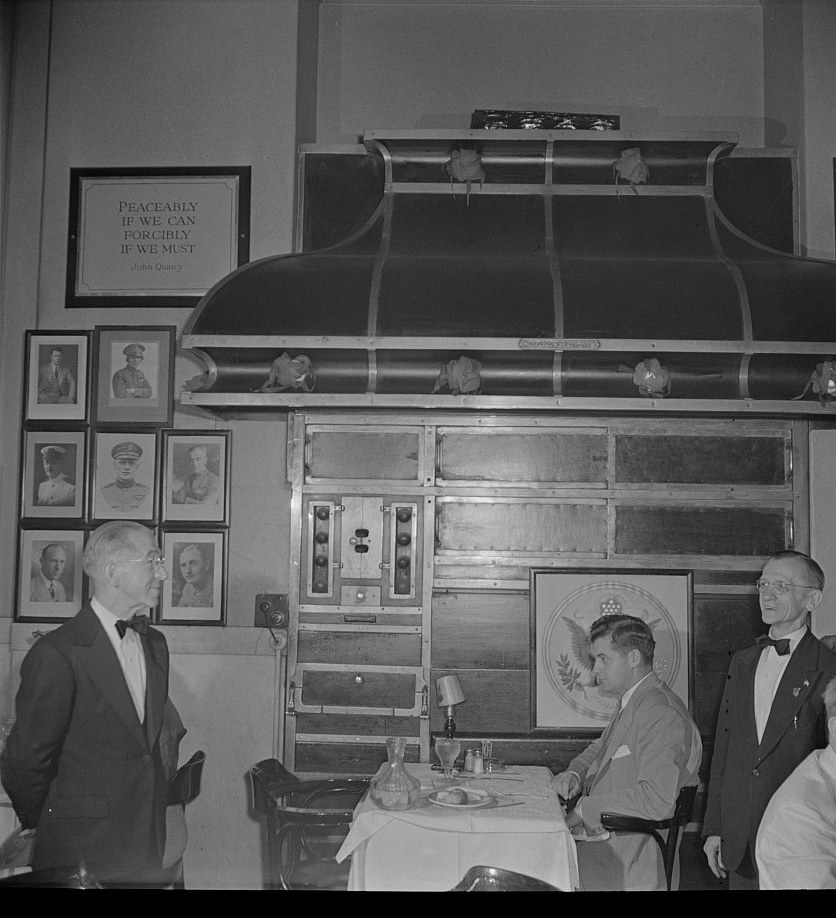
Photo: Marjory Collins, 1942, Library of Congress Prints & Photographs Division, no known restrictions
A reader wrote to me last month with a question I suspect a lot of people have been asking at the counter of a coffee shop: why is she being shown a screen asking for 20 percent on a muffin she is about to carry to the table herself? She wanted to know when this started. The honest answer is that it started about 160 years ago, that Americans hated it almost from the beginning, and that six states went as far as to make it a crime. The bans lasted about a decade, and the tip outlived them.
It came home in the luggage of rich Americans
Tipping was a European habit before it was an American one. In England and France the practice of pressing a coin into the hand of a servant, a coachman or a waiter went back centuries; English house guests had been leaving "vails" for their host's servants since Tudor times. The word "tip" itself is older than most people think. It turns up in the slang of London's underworld around 1700, meaning simply to give or to hand over. The story that it stands for "To Insure Promptness" is a later invention, and I have never seen a good source for it.
Wealthy Americans picked the habit up on their European tours in the years around the Civil War and brought it back as a mark of sophistication. The United States of the 1860s and 1870s was filling up with new hotels, new railroads and new restaurants, and with workers who had very little bargaining power. The tip arrived at exactly the moment employers were looking for ways not to pay them.
George Pullman worked out what a tip could do
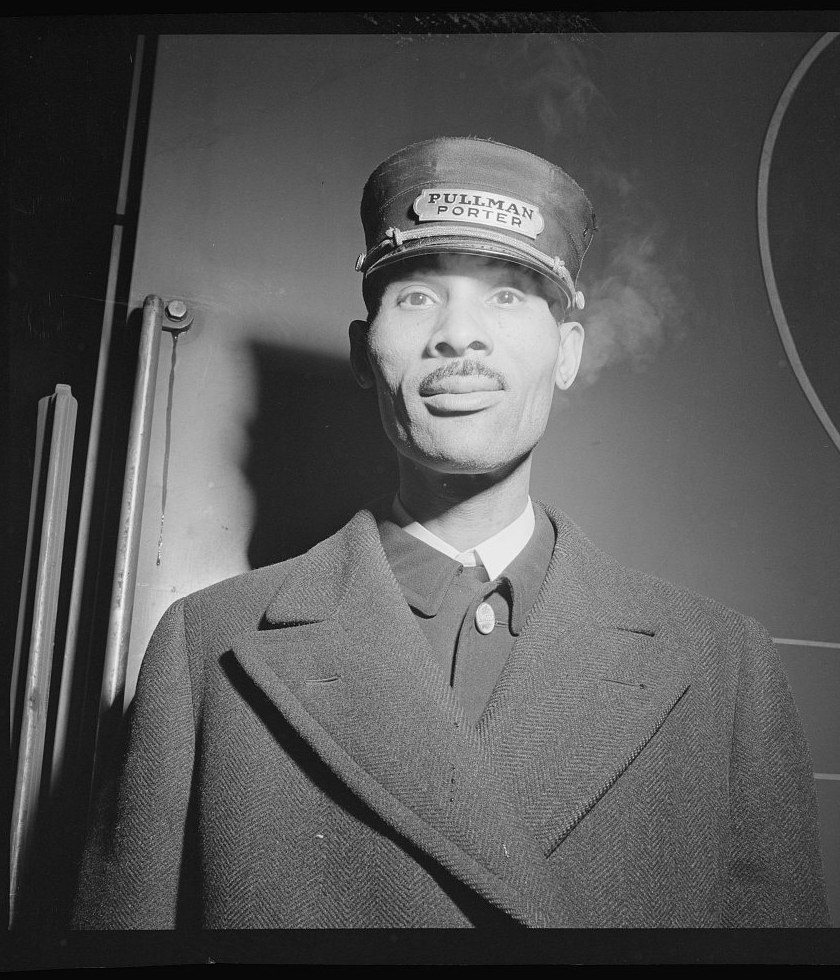
Photo: Jack Delano, 1943, Library of Congress Prints & Photographs Division, no known restrictions
The man who understood this best was George Pullman. His sleeping cars, which spread across the American railroads after the Civil War, were staffed by porters, and from 1867 onward Pullman hired Black men for the job, many of them recently freed from slavery. The company paid them a wage that nobody could live on and let it be understood that the rest would come from passengers. Porters shined shoes, made up berths, carried luggage and answered bells at every hour, and they smiled, because the smile was what the passenger thought he was paying for.
Pullman became the largest single employer of Black workers in the country, and the tip became a system rather than a courtesy. When the porters finally organised, under A. Philip Randolph and the Brotherhood of Sleeping Car Porters from 1925, one of their central demands was a wage that did not depend on the mood of a man in a berth. They got their first contract in 1937, a dozen years later.
The Itching Palm
By the turn of the century a good many Americans had decided that the custom was un-American, and they said so loudly. Travelling salesmen, who spent their lives in hotels and dining cars and were bled at every stop, formed an Anti-Tipping Society of America in Georgia in 1904. The journalist William Rufus Scott published a whole book against it in 1916 under the title The Itching Palm, in which he called the tip the price one American was willing to pay to make another American admit he was his inferior. (It is a very angry book, and a short one, and most of its arguments are still being made on social media today.)
The legislatures listened for a while. Washington State passed the first anti-tipping law in 1909. Mississippi, Arkansas, Iowa, South Carolina and Tennessee followed over the next six years, so that by 1915 six states had made giving or taking a tip an offence. The laws were almost never enforced. Waiters kept accepting coins, diners kept leaving them, and the courts and legislatures quietly gave up. The last of the six bans was repealed in 1926. A custom that depends on millions of small private transactions turned out to be very hard to police.
Europe went one way and America went the other
What makes the American story odd is that the countries that invented tipping mostly stopped. In France, where the waiter's "pourboire" had been a source of strikes and resentment for decades, the service charge was folded into the bill by law in the mid-twentieth century, and the words "service compris" on a menu still mean what they say. Most of the rest of Europe drifted towards rounding up the bill. In Japan the tip never took hold at all.
America did the opposite, and the reason was the law. When Congress passed the Fair Labor Standards Act in 1938 and created the first federal minimum wage, restaurant and hotel workers were left out entirely. They were brought in only in 1966, and on special terms: an employer could count a worker's tips towards the minimum, paying only half of it in cash. That "tip credit" is where the American arrangement was fixed. From then on the tip was most of the wage.
The $2.13 that has not moved since 1991
The cash part of that arrangement was set at $2.13 an hour in 1991, when it was half the federal minimum, and a 1996 amendment then froze it there while the full minimum went on rising. It is still $2.13 today. The Department of Labor's current table lists a federal cash wage of $2.13 and a maximum tip credit of $5.12, meaning an employer in a state that follows the federal rule can leave more than two thirds of a server's basic pay to the customers. If the tips fall short, the employer is supposed to make up the difference, and there is a long record of that not happening.
Seven states, plus Guam, have abolished the tip credit and require the full state minimum wage before tips: Alaska, California, Minnesota, Montana, Nevada, Oregon and Washington. Washington, you will notice, is the state that tried banning tips in 1909. It took another century to get at the problem from the other end.
What it looks like today
The screen my reader was looking at is the newest part of this. Tablet payment systems, which spread fast during the pandemic, put the tip question in front of customers at bakeries, food trucks and self-service counters where nobody had expected one before, and preset buttons of 18, 20 and 25 percent have pushed the default upward. People have started calling it tipflation. I think the older word, from 1916, was guilt.
The federal government has, for the moment, decided to make the tip cheaper rather than smaller. The tax law signed on 4 July 2025 created a deduction for "qualified tips" of up to $25,000 a year for the tax years 2025 through 2028, phasing out above $150,000 of income, and the IRS has since listed 68 occupations that count. It is a deduction, not an exemption, and payroll taxes still apply, so a server will see the benefit at filing time rather than in the pay packet. The cash wage, meanwhile, stays at $2.13, and the arrangement George Pullman found so convenient in the 1860s, where the customer pays the worker and the employer takes the credit, now has a line of its own in the tax code.
Enjoyed this story?Get a new one every day on social.