Harris & Ewing, Library of Congress Prints & Photographs Division, no known restrictions
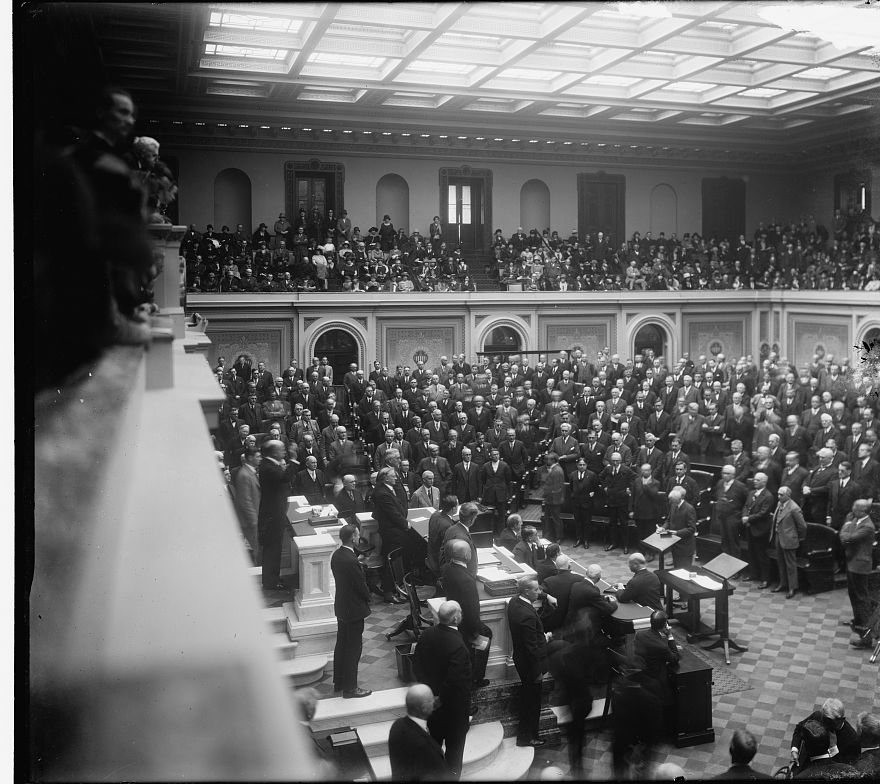
Fourteen members-elect of the US House of Representatives died between the midterm election of 4 November 1930, which was 96 years ago today, and the first day the new House sat. Seven were Republicans and seven were Democrats, so you might expect that to come out even. It did not. The party that won the election turned up to work in December 1931 and found itself in the minority.
I have been thinking about this since Tuesday night, when Democrats took the House and the Senate and every commentator explained that the new majority takes over in January. That two-month wait feels like a long time when you are watching it on cable. It used to be thirteen months.
One seat on election night
Herbert Hoover's Republicans went into the 1930 midterms a year into the Depression and were punished for it, losing 52 House seats and eight in the Senate. They survived, barely. The count came out at 218 Republicans, 216 Democrats and one Farmer-Laborite, and 218 is the smallest number that makes a majority. Nicholas Longworth of Ohio, the Speaker since 1925, expected to keep his gavel.
Then everyone went home and waited, because the calendar told them to. Terms began on 4 March, but under the old schedule a new Congress did not hold its first regular session until the first Monday of the following December, thirteen months after the voters had spoken. A president could call members back sooner. Hoover did not.
So a majority of one seat had to be kept alive for over a year, and it depended on a lot of older men in an age before antibiotics.
The funerals start at Thanksgiving
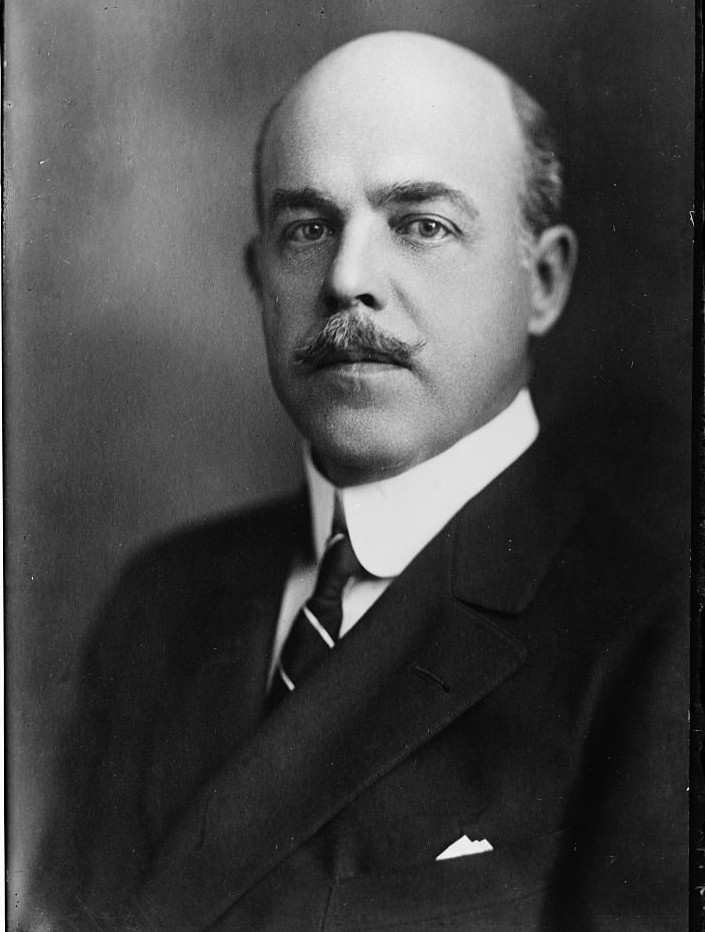
Bain News Service portrait of Nicholas Longworth, about 1920 to 1925. Library of Congress, no known restrictions
The first to go was John Quayle, a New York Democrat, on 27 November 1930, three weeks after the vote. A special election the following February gave his seat to Matthew O'Malley, who died in May without ever being sworn in. That district buried two congressmen in six months, and it is the detail I find hardest to get past.
Henry Allen Cooper, a Wisconsin Republican, died on 1 March 1931. Three days later Longworth closed the old Congress, telling the chamber, "Perhaps this is the last time I will address you from this rostrum." Nobody can say now quite what he meant by it. He died of pneumonia on 9 April while visiting friends in Aiken, South Carolina, aged 61. He was married to Alice Roosevelt, the daughter of Theodore, and his name is now on a House office building, which is more than most Speakers get.
The historian Andrew Busch told History.com he knew of nothing like it: "To my knowledge, it is unprecedented." I have not found anyone who disagrees.
Three seats that changed hands
Most of the vacancies went back to the party that already held them. Ohio kept Longworth's seat Republican. New York, Louisiana, Georgia and Missouri replaced their dead Democrats with live ones. If that had been the whole story, the Republicans would have kept their majority.
But the country was a year deeper into the Depression, and three Republican seats did not hold. Bird Vincent of Michigan died in July, and on 3 November 1931 his district elected a Democrat, Michael Hart. Ernest Ackerman of New Jersey died in October, and Percy Stewart, another Democrat, won that seat on 1 December, six days before Congress met.
The third was the strangest. Harry Wurzbach, a rare Texas Republican, died on 6 November. Eighteen days later voters replaced him with Richard Kleberg, an heir to the King Ranch, a Democrat who then took a young Houston schoolteacher to Washington as his secretary. The teacher's name was Lyndon Johnson. I doubt many people in Washington noticed him arrive.
Garner takes the chair
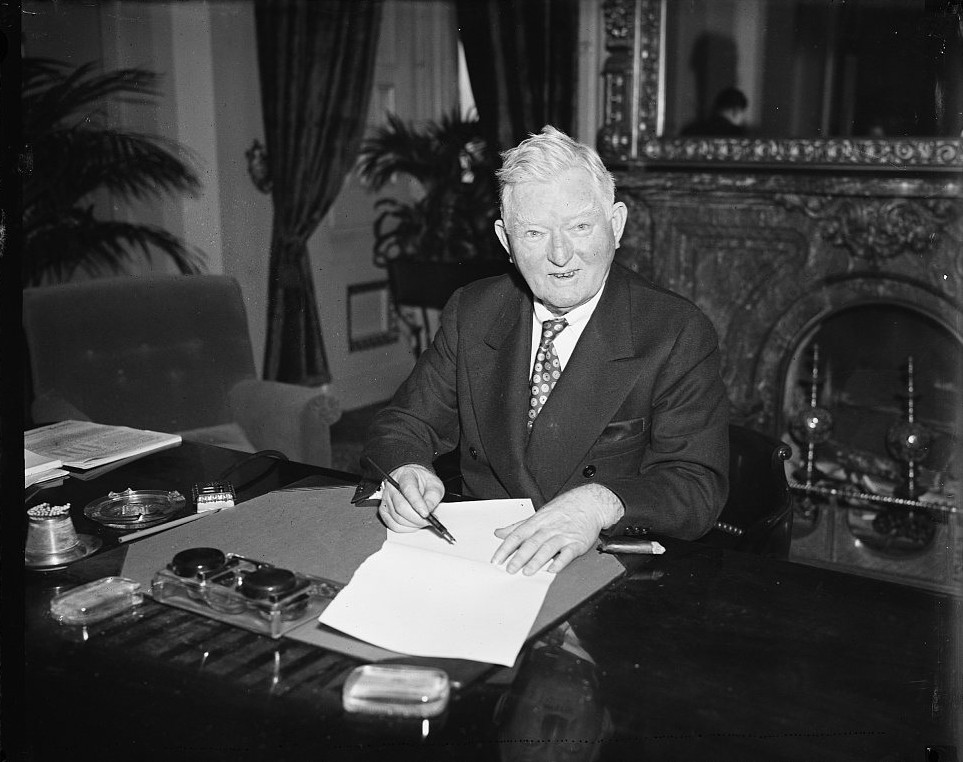
John Nance Garner at his desk, photographed in 1936 by Harris & Ewing. Library of Congress, no known restrictions
When the House finally met on 7 December 1931, Democrats had 219 seats to the Republicans' 214, with the Farmer-Laborite and one empty chair from New Hampshire, where Fletcher Hale had died in October. John Nance Garner of Texas became Speaker, and he got the job a year after his party had lost the election.
Democrats went on to hold the House for all but four of the next 63 years. Between then and 1995, Republicans ran it only from 1947 to 1949 and from 1953 to 1955.
Why you only wait until January
George Norris, a Nebraska Republican, had spent years trying to kill the old calendar, and I would not claim the funerals of 1931 did it for him. His argument was about defeated members who kept voting long after they had lost. Still, the 72nd Congress made the case better than any speech could. The Twentieth Amendment was ratified in January 1933, moved the start of a new Congress to 3 January, and cut the gap between election and session from about thirteen months to about two.
That is why the people elected on Tuesday will be sworn in early next year. It gives them around 60 days to stay alive, and the Republicans of 1930 would have taken that deal.
Enjoyed this story?Get a new one every day on social.