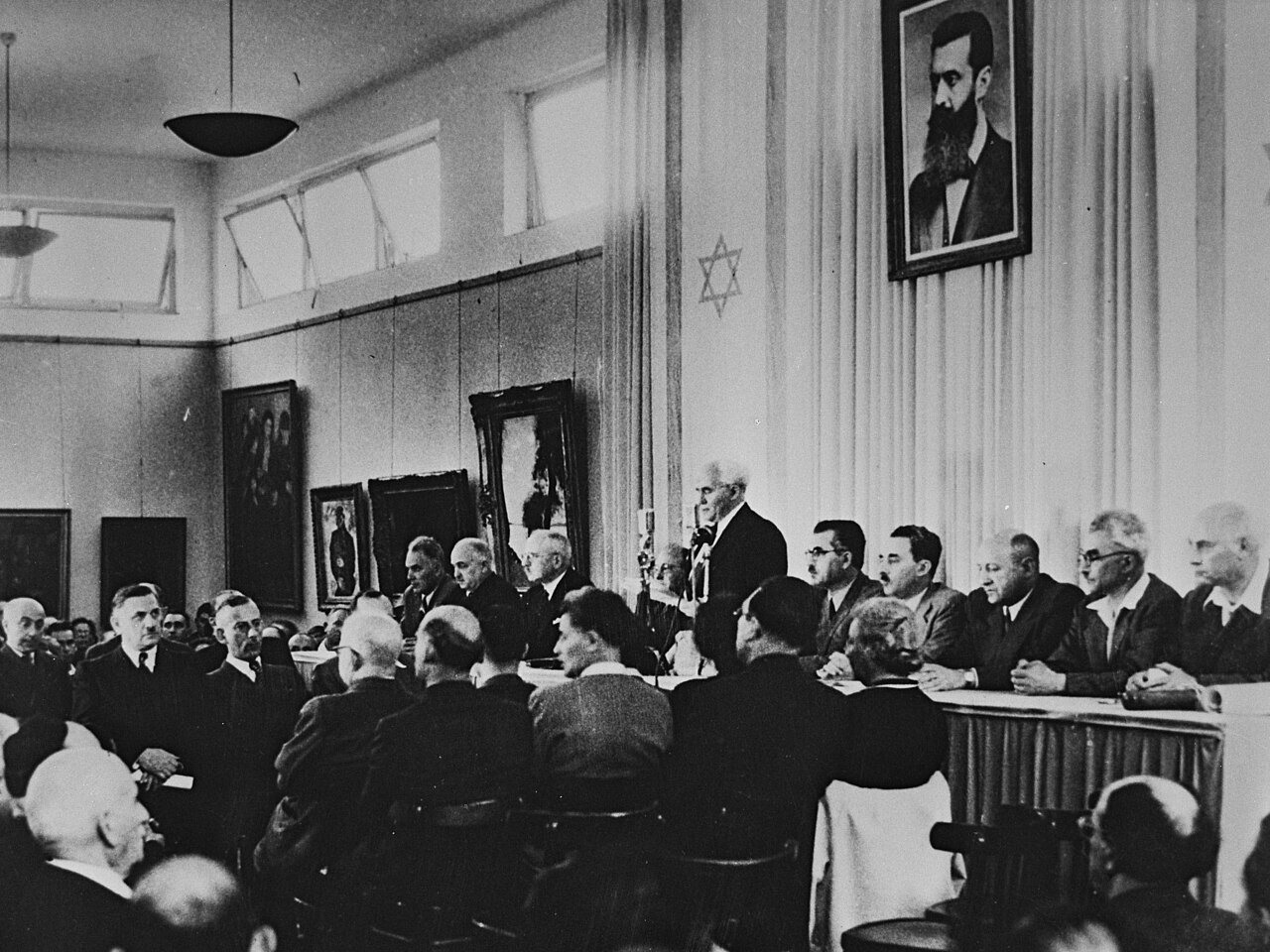
David Ben-Gurion reading the Declaration of Independence, Tel Aviv, 14 May 1948, Government Press Office (Israel), CC BY-SA 3.0, via Wikimedia Commons
The number was about 400. That is how many full-time yeshiva students David Ben-Gurion agreed to leave out of the army in 1948, in the middle of the new state's first war, when nearly every other young man was being called up.
The same arrangement, grown out of all recognition, is the hinge of Israel's coalition talks. This week Avigdor Liberman, whose Yisrael Beytenu party has built much of its identity on drafting the ultra-Orthodox, dropped his veto on sitting in government with the Haredi parties and said he could compromise on the conscription law. Gadi Eisenkot, who is trying to assemble a government without Benjamin Netanyahu, spoke of progress. United Torah Judaism welcomed the "flexibility". Nobody yet has a deal.
A favour in a war
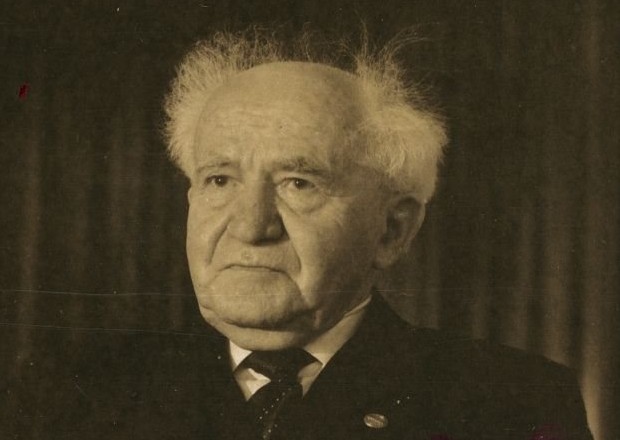
Black and white photograph of David Ben-Gurion in old age, seated, wearing a dark suit and tie
The bargain was struck between Ben-Gurion and Yitzhak-Meir Levin of Agudat Yisrael, the main ultra-Orthodox party. Young men whose profession was Torah study, and only that, would be deferred from service. The case for it was made three years after the Holocaust, which had destroyed the great yeshivas of Poland and Lithuania along with most of the people in them. Haredi leaders argued that the small community left in Palestine had to rebuild that world of learning, and that taking its scholars into the army would end it.
Ben-Gurion was a secular socialist with little patience for religious politics. He also needed the religious parties inside the tent. A year earlier he had sent Agudat Yisrael what became known as the "status quo" letter, promising that the state would keep the Sabbath as its day of rest, keep kosher kitchens in public institutions, leave marriage law to the rabbis and allow religious schools their autonomy. The draft deferment fitted the same logic. It was cheap at the time, and it bought peace on a front he did not want to fight on.
What he expected to happen to it is harder to say. The usual reading is that he assumed the Haredi world was dying out anyway and that 400 students would stay roughly 400. Some accounts have him regretting the whole thing later. I have never seen a document that settles it either way, and I'd be wary of anyone quoting him with confidence on the point.
David Ben-Gurion, photograph by Bernard Gotfryd, 1967, Library of Congress Prints & Photographs Division, no known restrictions
From a quota to no quota
For two decades the numbers stayed small. After the Six-Day War a committee under Defence Minister Moshe Dayan kept the arrangement and set the annual figure at 800.
The real change came in 1977, when Menachem Begin's Likud won power for the first time and needed Agudat Yisrael to govern. The coalition agreement lifted the quota altogether. From then on, any young man enrolled full-time in a yeshiva could defer, year after year, until he was too old to be called up. The Haredi community was also growing fast, with large families, and the deferment shaped how its men lived: to stay out of the army, they had to stay in study and out of most paid work.
Half a century in the courts
The courts circled the problem for decades, and the early petitions failed. Judges in 1970 and again in 1986 left the arrangement alone, treating it as a matter for the defence minister. By the 1990s the numbers had grown too large for that answer to hold.
In 1998 the Supreme Court said the arrangement needed a proper law, not a ministerial habit. The Knesset passed the Tal Law in 2002, which offered ultra-Orthodox men a route into service or national service; very few took it, and the court struck the law down in 2012. In June 2024 a panel of nine justices ruled unanimously that there was no legal basis for a blanket exemption and that the state had to start drafting Haredi men. The figure cited that year for yeshiva students covered by the old system was close to 50,000.
Where it stands this week
Since that ruling the army has sent out draft orders, most of which have gone unanswered, and Netanyahu's government spent much of its time looking for a law the Haredi parties could accept and the court would allow. United Torah Judaism walked out of his coalition over it in 2025. Now it is back at the centre of the attempt to form the next government.
Liberman's shift does not settle anything by itself. He still says his red lines are ending Netanyahu's premiership and avoiding another election, and the reservists' leader Yoaz Hendel has already attacked the compromise. United Torah Judaism says it would join if the conscription terms are acceptable, and Shas is expected to follow its lead. What "acceptable" means to the yeshivas, and what a Supreme Court that has already ruled once will accept, may turn out to be two different numbers. Whether Eisenkot can find one that both will sign is the open question, and nobody I have read this week claims to know the answer.
Enjoyed this story?Get a new one every day on social.