Rome's Graffiti on Domitian's Arches Said 'Enough.' Then They Came Down
Some time in the later first century, somebody in Rome stopped in front of one of the emperor Domitian's new arches and wrote a single Greek word on it. Suetonius, who tells the story, does not say what with, or how long it stayed up. The word was arkei, "it is enough," and it was also a pun, because it sounds like arci, Latin for "to the arch." Domitian had put up so many of them, Suetonius says, and so large, that this was the natural comment.
On Thursday the National Capital Planning Commission voted 8 to 4 to approve a triumphal arch for Memorial Circle, across the Potomac from the Lincoln Memorial: 166 feet of structure and three gilded figures on top, 250 feet in all. The same day Judge Tanya Chutkan blocked work on it for 14 days. Vietnam veterans, Virginia and Washington, D.C., say the project needs Congress and has not got it. The Justice Department says they lack standing. Who gets to put up one of these things was a live question in Rome as well.
The arch of the man who had too many
Domitian's enemies said he wanted the glory without the wars to match. Tacitus sneers that his triumph over the Germans was a sham, with slaves bought and dressed up to play the prisoners. Tacitus loathed him and the claim should be handled with tongs, but it tells you how the arches were being read by people of his class.
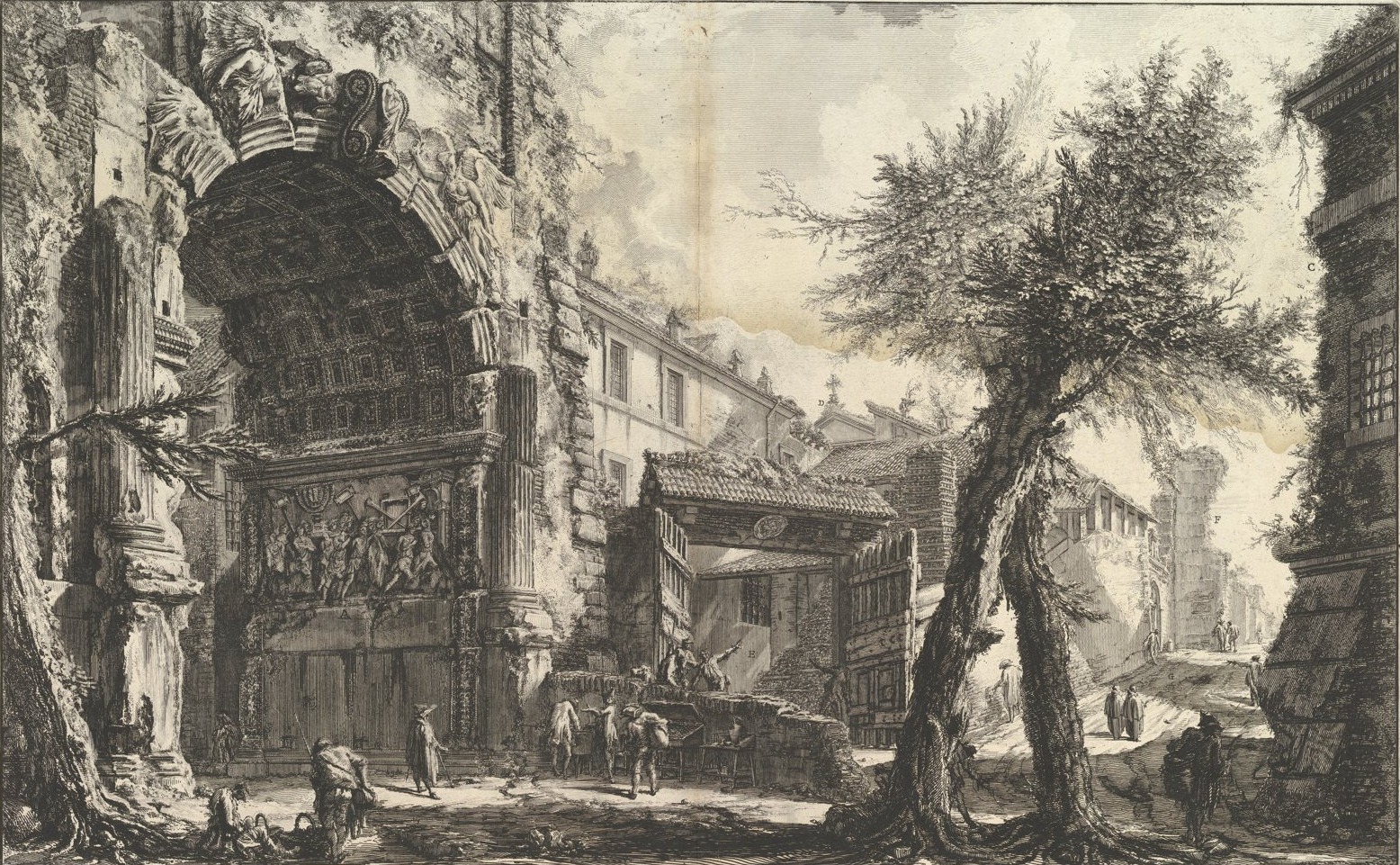
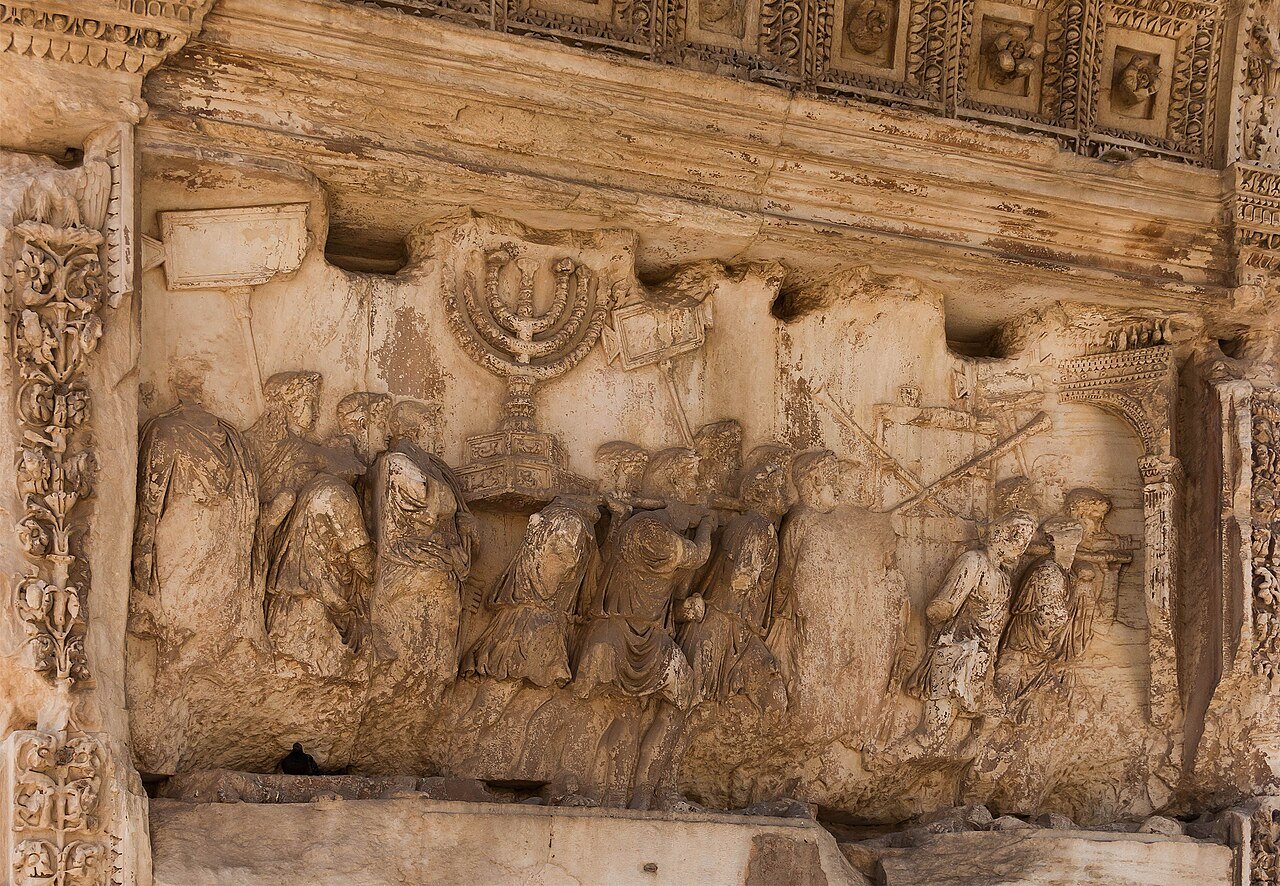
He was stabbed in his own palace in September 96. The Senate voted to wipe out his memory, and Cassius Dio records what followed: the gold and silver images were melted down for the money, and "the arches, too, of which a very great number were being erected to this one man, were torn down." I know of none standing in Rome today. The one he built that survives is the one with his brother's name on it, where the relief of the menorah being carried from Jerusalem is still on the passage wall. Rome's Jews, by long tradition, would not walk beneath it.
Editing an arch
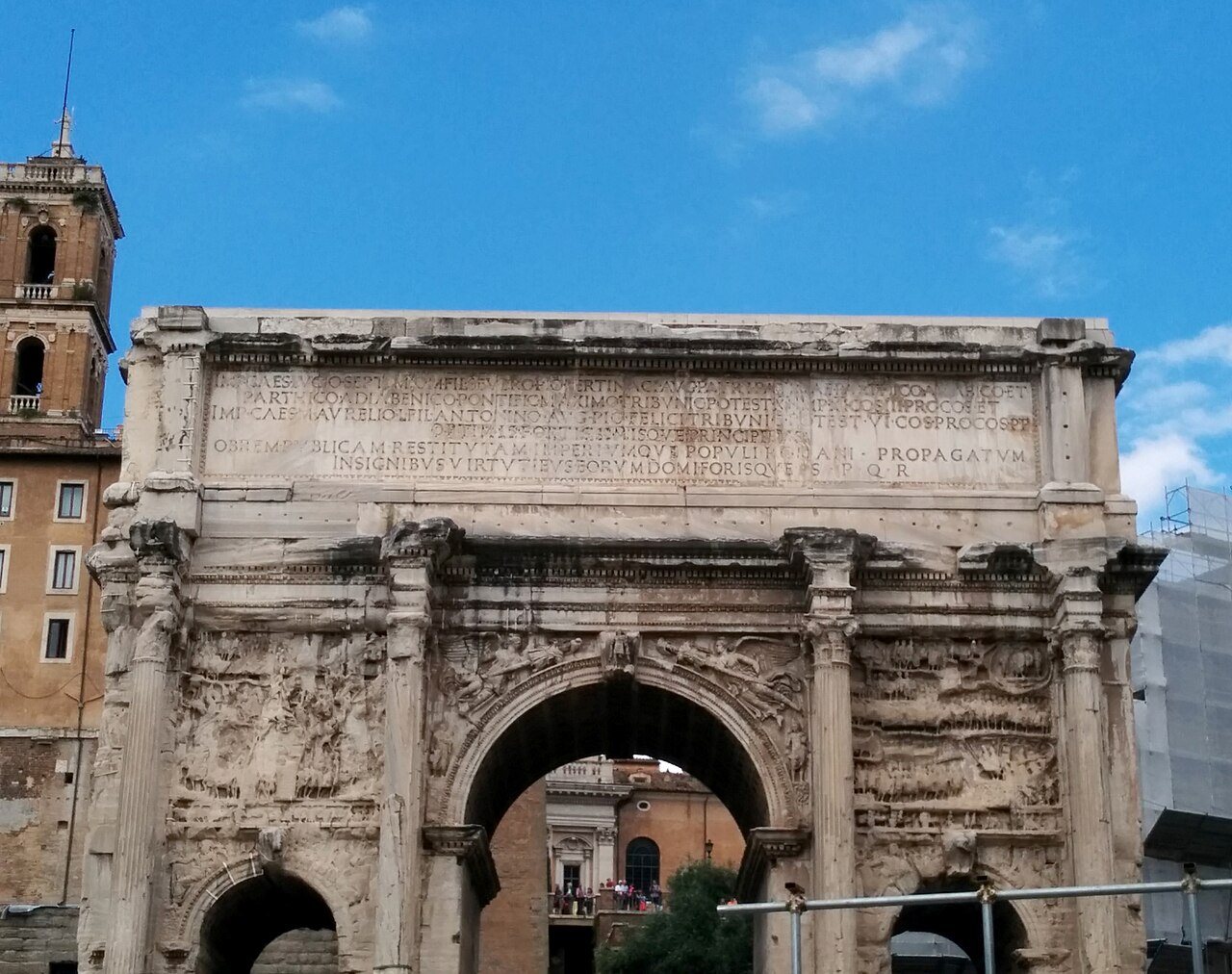
Others found that an arch could be revised. Severus's arch was dedicated to him and his two sons, and when Caracalla had his brother Geta murdered in 211, the name was chiseled out of the inscription and new wording, praising the best and bravest princes, went in over the gap. Geta is still there in a sense. The bronze letters are gone, but the holes for the old ones can be read.
Constantine's arch celebrates a civil war, his defeat of Maxentius, and much of its best sculpture was taken from monuments to Trajan, Hadrian and Marcus Aurelius, with the imperial heads recut. It is a very handsome piece of second-hand work.
What saved any of them was mostly accident. The Frangipani family turned the Arch of Titus into a fortified tower in the Middle Ages. A family called the Cimini built a tower on the Severan arch, and half of it belonged to them. William Smith's Victorian dictionary of antiquities counts twenty-one arches recorded in the city and five remaining.