Whenever Greenland's American base comes up, the question I get from people who know I write about everyday life is a simple one. Who was living there before?
It is a good week to ask. On Tuesday Greenland's parliament approved the security agreement with the United States and Denmark, 16 votes to none with seven abstentions. The deal opens the way to more US bases and lets the Americans "modernise and expand" at Pituffik Space Base in the far northwest. Danish lawmakers debate it later this month. Greenland's foreign minister, Múte Egede, wrote on Facebook that "the road to this point has been a difficult one for us as a people." For one small group of Greenlanders, that road starts at a particular meeting in 1953.
A hunting place with a trading post
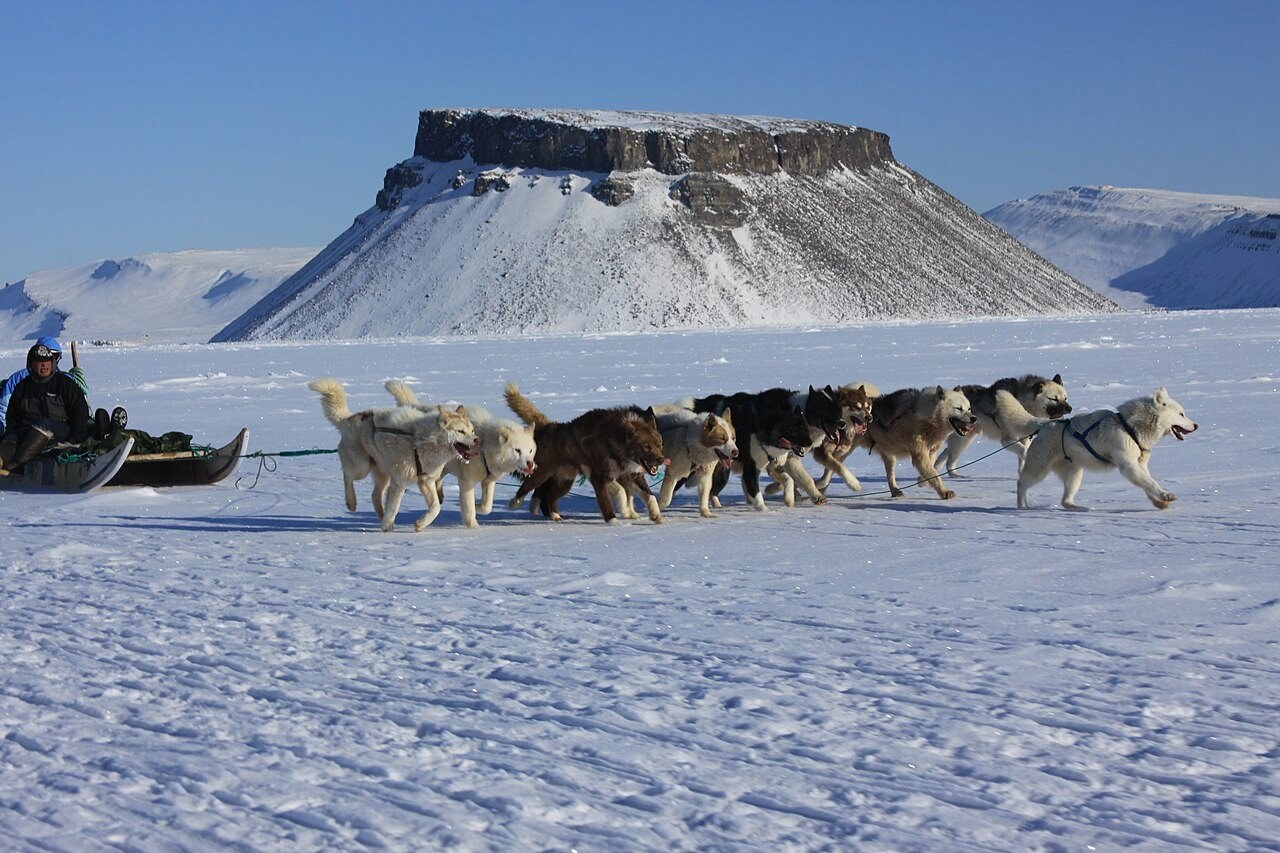
Pituffik means something like "the place where you tie things up", and it was a hunting camp of the Inughuit, the northernmost Inuit people in the world. The nearby settlement of Uummannaq sat under a flat-topped mountain on North Star Bay. In 1910 the Danish explorer Knud Rasmussen set up a trading post there and called it Thule, after the old name for the end of the known world, and the name stuck to everything around it. People hunted seal, walrus and narwhal from the bay, sold furs at the post and travelled by dog sled. That was the arrangement for the next 40 years.
Twelve thousand men arrive
Denmark and the United States signed a defence agreement on 27 April 1951. That June a sealift code-named Operation Blue Jay sailed from Norfolk, Virginia, with 120 ships, about 12,000 men and 300,000 tons of cargo. It reached Thule on 9 July and began building, in secret, about 10 km from the settlement. Base personnel would reach about 10,000 around 1961. The Inughuit in the district numbered a little over a hundred.
The base shut off a large area of the land and water they used for hunting and fishing. Nobody had asked them. According to the Danish national encyclopedia, officials had been planning to move them since 1951 and did not include them in those discussions. Copenhagen's worry, as it was later put, was that contact with soldiers would be unhealthy.
The meeting on 25 May
Residents were told about the decision at a meeting on 25 May 1953. The number usually quoted is four days' notice, and the Danish encyclopedia says only that it was all done within a month. The figures have been argued over for 70 years. I am using the Danish encyclopedia's count of 27 families and 116 people, though you will also see 130 and 87.
Thirteen families went about 120 km north, by dog sled, to the site that became Qaanaaq. The others went to settlements elsewhere in the district. At Qaanaaq they lived in tents from May until November while 27 houses went up, at a cost of 8.65 million kroner, of which the United States paid more than half. Greenland stopped being a Danish colony on 5 June, days after that first meeting, a piece of timing I have never seen explained to anyone's satisfaction.
The base stayed, and it went on affecting the people it had displaced. In 1968 a B-52 crashed near Thule and spread plutonium across hunting grounds the Inughuit still used.
Forty years of filing claims
I find this part the hardest to read. A claim for compensation in 1954 was never processed. Claims in 1959 and 1960 were rejected, and so was another in 1985. In 1987 the Justice Ministry set up an inquiry, which reported in 1995 that the move had not been a forced relocation.
In 1996 the Inughuit formed an association called Hingitaq 53, the word meaning "discarded", and sued for 235 million kroner and the right to hunt on their old land. In 1999 the Eastern High Court awarded 500,000 kroner to the group and 1,265,000 kroner in individual payments. Prime Minister Poul Nyrup Rasmussen and Greenland's premier, Jonathan Motzfeldt, issued a joint apology in writing, using the Greenlandic word utoqqatserpugut, "we are sorry". There was no ceremony.
The Supreme Court upheld the judgment in 2003. Individuals received 15,000 or 25,000 kroner each. The hunting rights were not recognised. The European Court of Human Rights rejected the case too, since Denmark had not ratified the convention when the move took place.
Pituffik and Qaanaaq now
Thule Air Base became Pituffik Space Base on 6 April 2023, so the old Inughuit name now belongs to the base. Last year about 150 American service members were stationed there permanently.
Qaanaaq had 591 residents in 2025. It looks across a fjord towards the ice, with brightly painted houses set in rows on a slope, and the average high in January is around minus 18. There is no road back to Uummannaq.
Enjoyed this story?Get a new one every day on social.