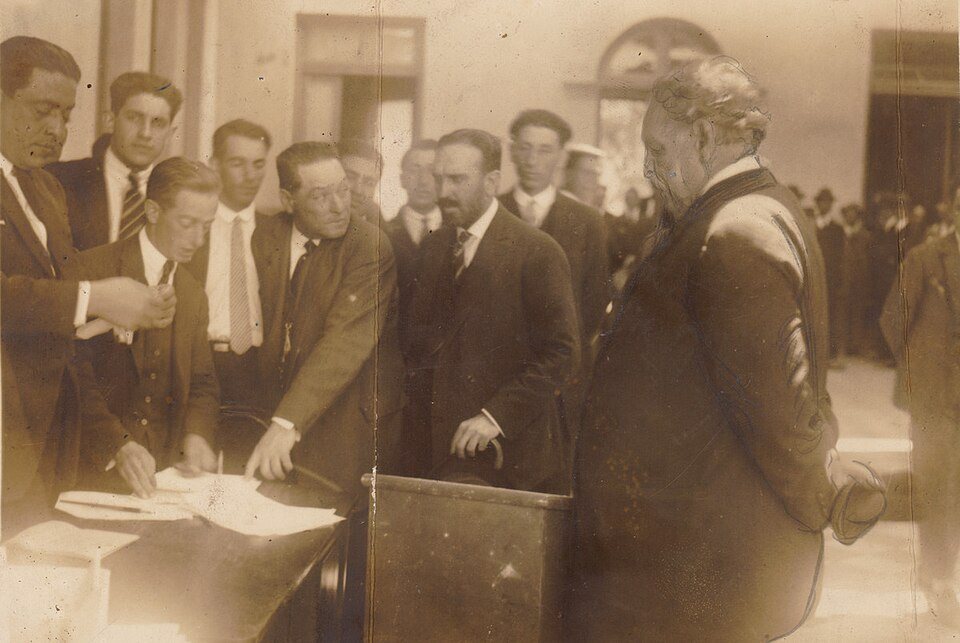
Photo: José Batlle y Ordóñez casting his vote, CC BY 2.0, via Wikimedia Commons
Since 23 October 1919, Uruguay has not officially had Christmas. It has 25 December, which is still a public holiday, but the law calls it Día de la Familia, Family Day. The week before Easter is Semana de Turismo, Tourism Week. The Epiphany, when children in much of the Spanish-speaking world get their presents from the Three Kings, became Día de los Niños, Children's Day.
That is the country Pope Leo XIV flew into on 6 November, at the start of a twelve-day tour that goes on to Argentina and Peru. It is the first papal visit to Uruguay since 1988. The Vatican put the crowd at his welcome in Montevideo's Plaza Independencia at about 30,000, and his three days there took in masses in Paysandú and Florida before he flew on to Argentina on Sunday. The press coverage has mostly described Uruguay the way it describes itself, as the least Catholic and most secular country in Latin America. It got that way on purpose, and a good part of the purpose belonged to one man.
The newspaperman who ran the country
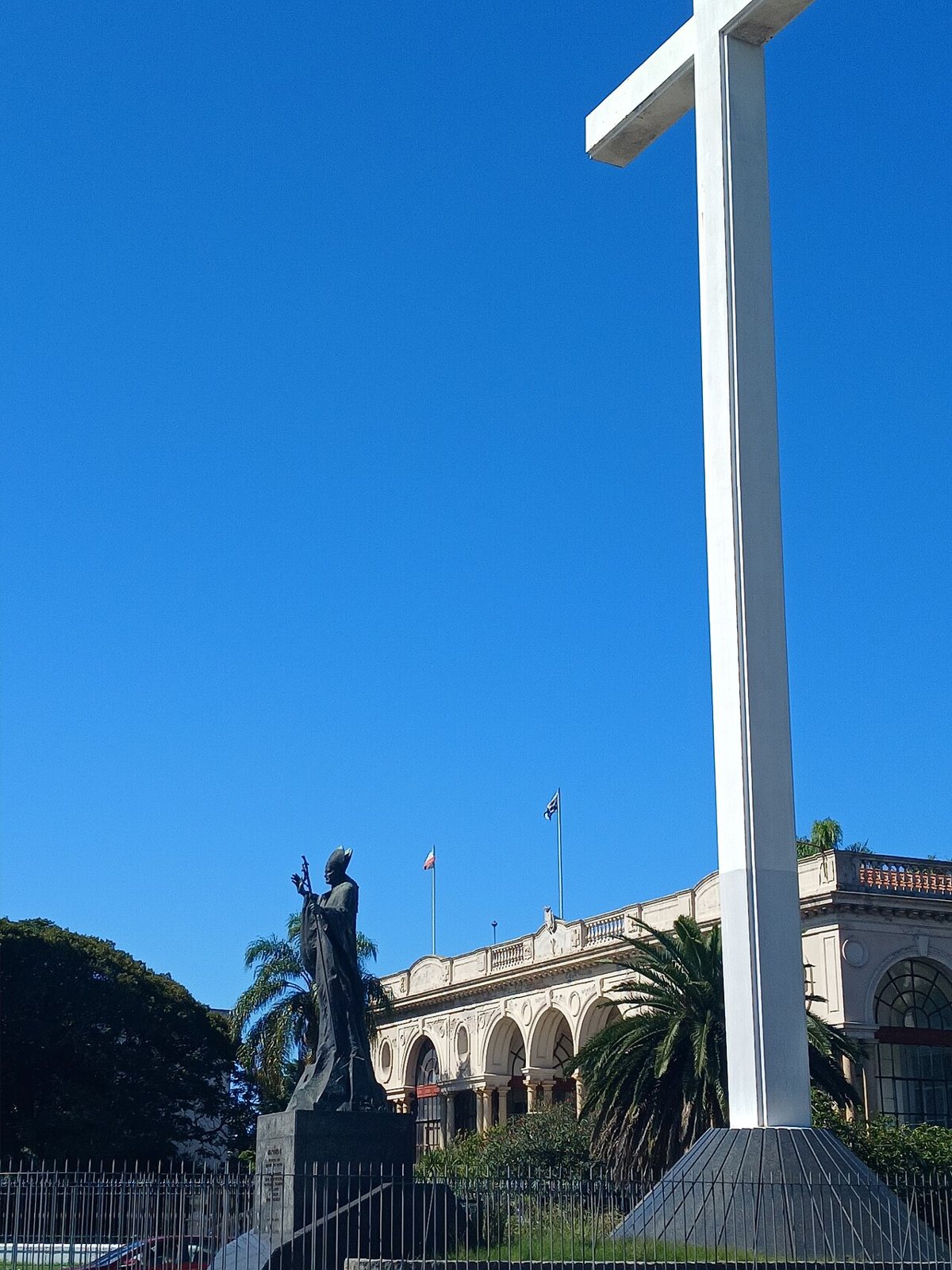
The cross from John Paul II's 1987 open-air mass and a statue of the pope in Montevideo. Photo: NaBUru38, CC BY-SA 4.0, via Wikimedia Commons
José Batlle y Ordóñez founded the Montevideo newspaper El Día in 1886 and used it for decades as a weapon. He was president twice, from 1903 to 1907 and from 1911 to 1915, and in between and afterwards he ran the Colorado Party, which ran Uruguay. His programme was a welfare state decades before most of Europe had one: the eight-hour day, pensions, state-owned banks and utilities, free secondary schooling. He also had very little patience with the Catholic Church.
Uruguayans like to tell you that El Día printed "dios" with a small d. I have seen this repeated in a lot of places and never seen the front page in question, so treat it as the kind of story that is true in spirit.
What is documented is the steady pace of the campaign. In 1906 crucifixes were taken down from public hospitals. A divorce law followed in 1907, and in 1913 a second law let a wife divorce her husband on her own request alone, without giving a reason, which was startling for its time anywhere. In 1909 religious teaching was removed from the state schools.
A constitution, then a calendar
The new constitution, approved by voters in 1917 and in force from 1 March 1919, finished the legal part. The state would support no religion. The Church kept ownership of the churches it already had, including those built partly with public money, which was the compromise that got the clause through.
Batlle was no longer president by then. The holiday law was passed in October 1919, under his protégé Baltasar Brum, and it is the part foreigners remember. Law No. 6997 did not abolish the religious holidays. That would have been unpopular, and the government was not stupid. It kept the dates, kept the days off, and changed the names. Christmas became Family Day, Epiphany became Children's Day, and Holy Week became Tourism Week. The Feast of the Immaculate Conception on 8 December became Beach Day, Día de las Playas, which is perhaps the most Uruguayan sentence ever written into law. (It was later dropped as a holiday altogether.)
What Tourism Week turned into
The renaming did something the anticlerical campaigners might not have expected: it gave the week a second life. Semana de Turismo is now Uruguay's big autumn break. People head for the coast or the countryside, and in Montevideo the Semana Criolla fills the Prado with gaucho rodeo, the riders trying to stay on unbroken horses while the crowd eats grilled meat. Churches still hold Holy Week services, and plenty of people go. The state just calls the week something else.
Surveys over the last two decades have put the share of Uruguayans with no religion at well over a third, far above anywhere else in the region. Uruguay decriminalised abortion in 2012, and last year it legalised assisted dying, both of which the Vatican opposes and both of which came up in coverage of the trip.
The cross that stayed
The last time the argument flared was during John Paul II's visits. For his open-air mass in Montevideo in 1987, a very tall cross was put up beside one of the city's main avenues. Afterwards there was a fierce row over whether a religious symbol could stay on public land in a lay state. Parliament eventually voted to let it stay, and the cross is still there, now with a statue of the Polish pope beside it.
Pope Leo is across the River Plate in Argentina now, where Christmas is still called Christmas. He missed Family Day by about seven weeks, though he would at least have recognised the date.
Enjoyed this story?Get a new one every day on social.