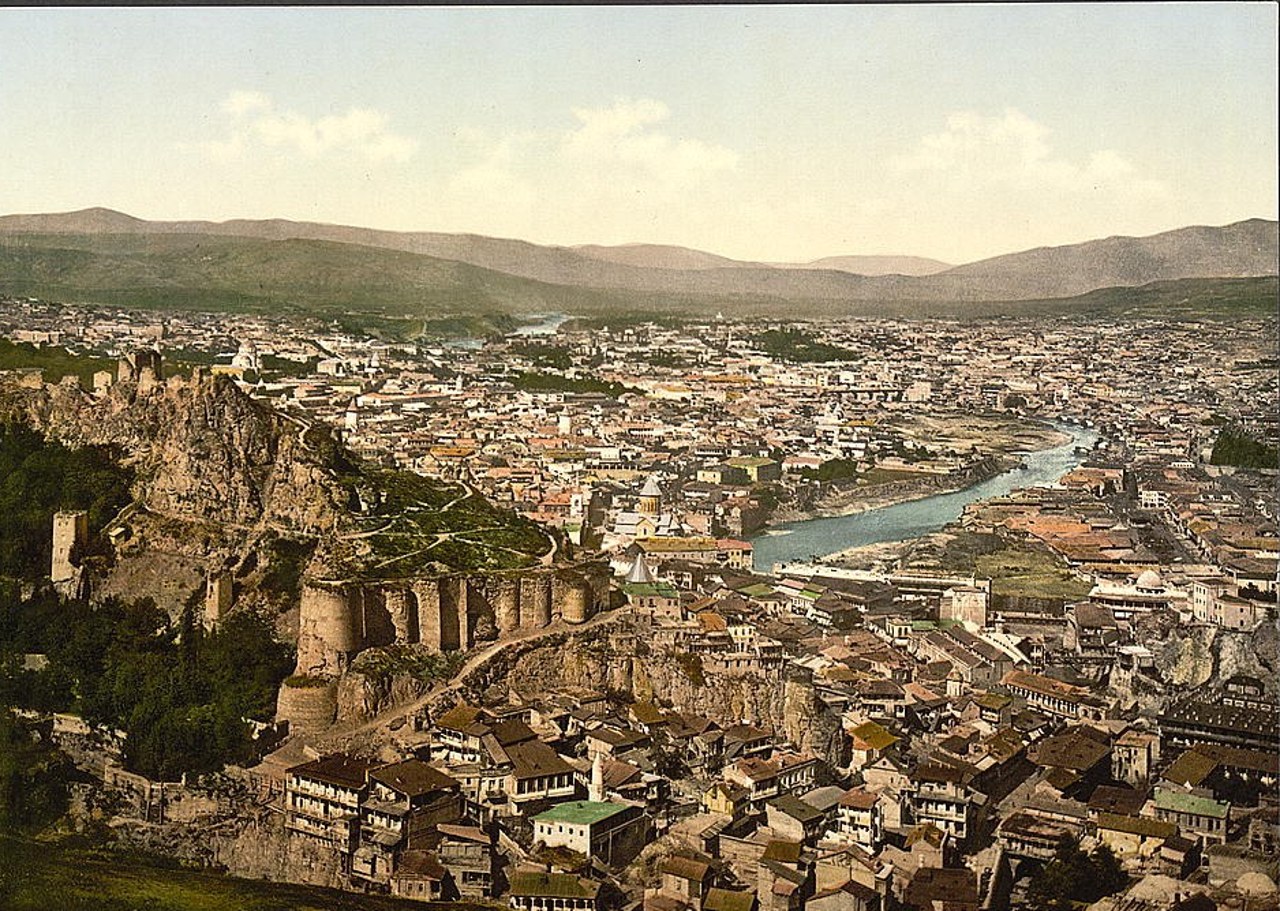
Jialiang Gao, www.peace-on-earth.org, CC BY-SA 3.0, via Wikimedia Commons
Reuters reported on Monday that Houthi forces had come within about 80 km of Aden, their closest approach since 2015, and were fighting at a camp at the entrance to the Tur al-Bahah district. The city is the temporary capital of Yemen's internationally recognised government. Its airport has been hit, and so has the presidential palace.
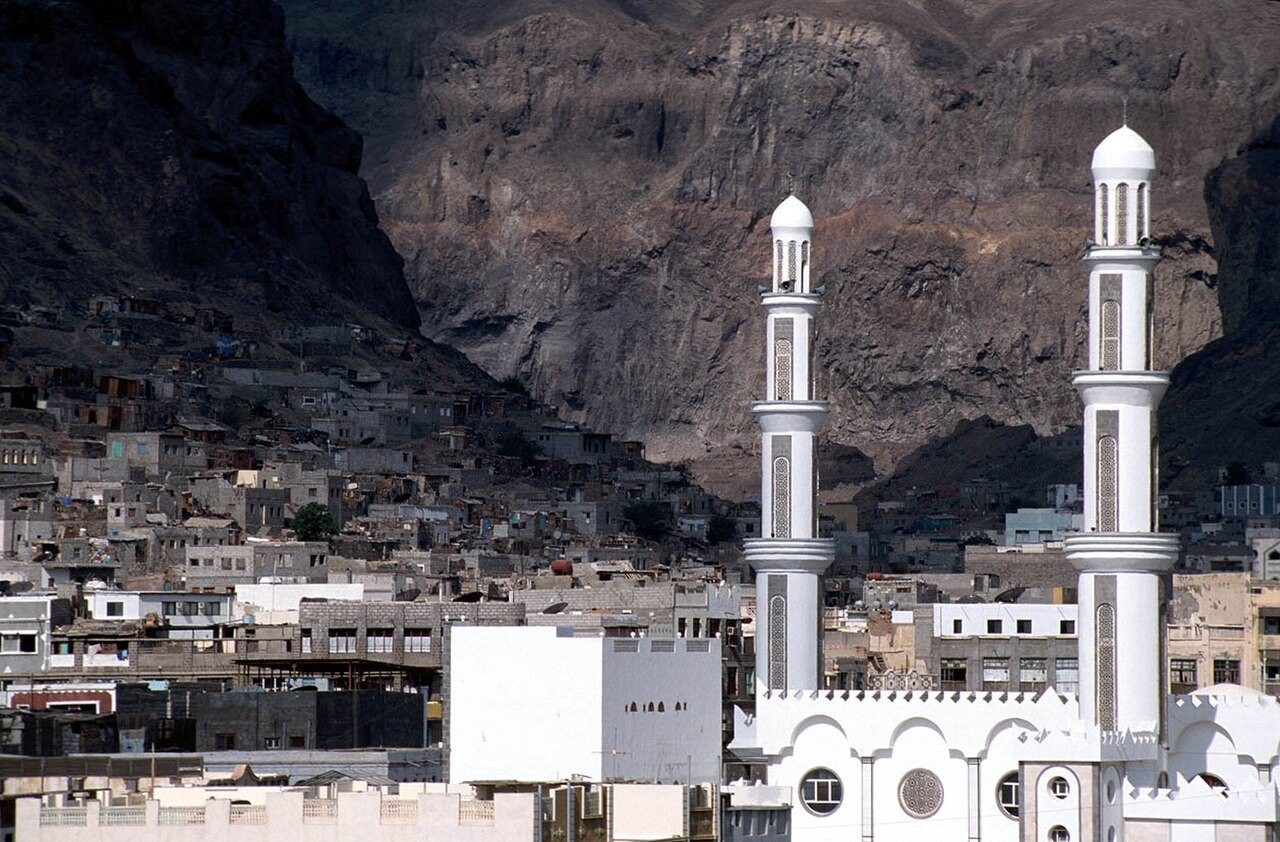
Everyone writing about this has called Aden strategic, which is true and tells you very little. When the British arrived it had about 600 inhabitants, roughly half of them Jewish, and a reputation that had long outlived its trade. Almost everything people now mean by "Aden" dates from one naval surveyor's stubborn idea in the 1830s.
A surveyor looking for a coal heap
Stafford Bettesworth Haines was an officer of the East India Company's Indian Navy. Steamships had started to make the run between Bombay and Suez possible, and steamships eat coal, so somebody had to find a place to store it. In 1833 Haines was sent to buy the island of Socotra from the sultan of Mahra. The sultan told him the island was a gift from God and not for sale, and added, by Haines's own report, that the British would not take it by force because they "believed our principles of justice would not permit us to do so."
The British did try to take it, and the attempt failed. Haines turned to the mainland port he had been telling Bombay was the better prize all along.
The Deria Dowlut
The excuse came in January 1837, when a Madras ship called the Deria Dowlut (the spelling varies) ran aground a few miles from Aden, full of pilgrims bound for Mecca. She flew British colours and belonged to a niece of the Nawab of the Carnatic. Some accounts suspect her master of wrecking her on purpose. Local men stripped her, passengers were abused, and the cargo turned up for sale in the bazaars of Aden, which made the denials of the Sultan of Lahej, Muhsin ibn Fadl, rather hard to credit.
Haines went to collect. He held the sultan liable for about $12,000 and got back goods worth $7,800, with a promissory note for the rest. He also came away, in early 1838, with an agreement to cede the port for an annual payment. Then he learned that the sultan's son was planning to kidnap him and take the papers back, and he left for Bombay rather quickly. I have always liked that the founding document of a colony nearly ended up in the same place as the stolen cargo.
When he returned the sultan had changed his mind. There were weeks of blockade and shots exchanged, and the Bombay government, worried that Mehmet Ali of Egypt would take Aden first, sent warships.
A morning in January 1839
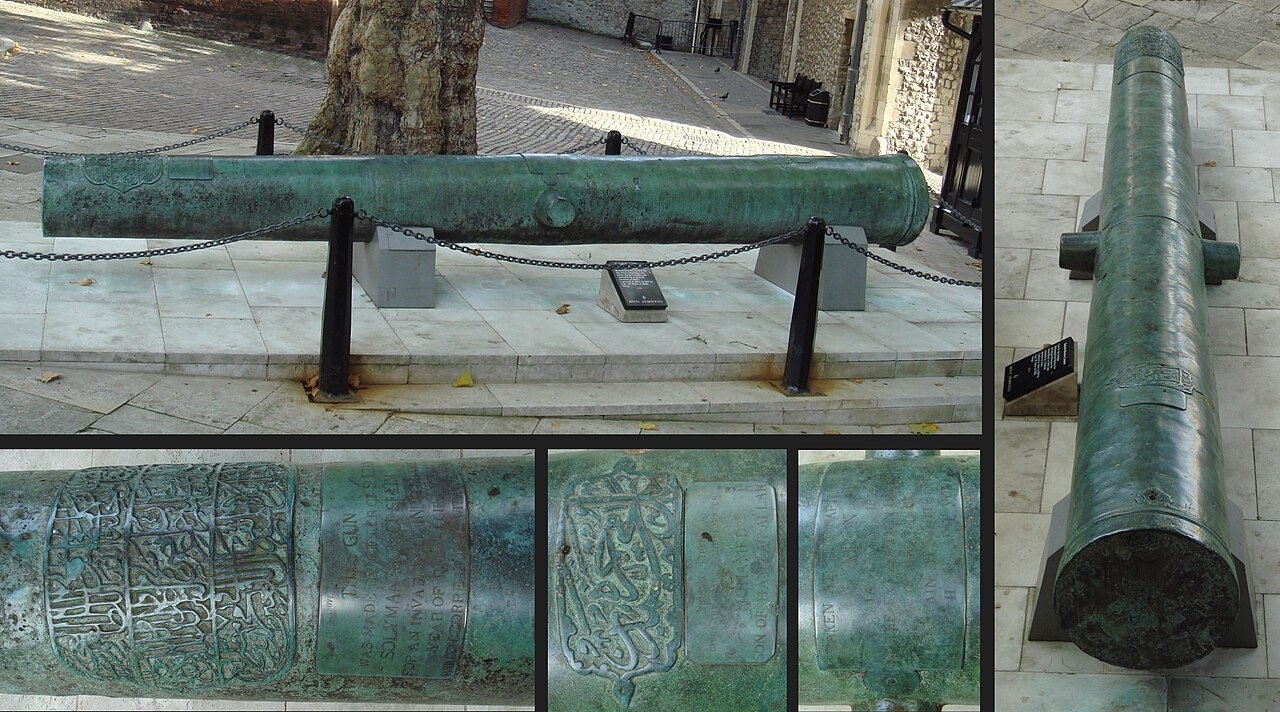
Bronze gun cast in 1530-31 for Suleiman the Magnificent, taken at Aden in 1839 and now at the Tower of London. PHGCOM, CC BY-SA 3.0, via Wikimedia Commons
HMS Volage and HMS Cruizer joined Haines's Coote with about 700 troops, Europeans and Bombay sepoys. On 19 January 1839 the ships pounded the batteries on Sira Island and in front of the town, and the troops landed and stormed the place. It was over within hours. The historian of the Indian Navy counted about sixteen British killed and wounded (other accounts differ) and 139 of the defenders missing, with many more wounded. It was the first territory added to the empire under Queen Victoria.
Among the guns taken was a huge bronze piece cast in 1530-31 for Suleiman the Magnificent, for an Ottoman expedition to drive the Portuguese out of India. It went to London and has been at the Tower since 1844.
The sultan signed in February. About 5,000 tribesmen tried to retake the town that November and were driven off, and Haines beat back later attempts too. He spent the next fifteen years as political agent, without leave, turning the village into a free port, offering cheap rents to anyone who would build in stone and paying off the surrounding tribes. By the early 1850s Aden had somewhere above 20,000 people (the sources disagree on the figure and the year), and for decades the tribesmen called its inhabitants Awlad Haines, "Haines's children."
His books were a mess, because there was no bank and he paid for politics out of the treasury without proper records. Auditors found a £28,000 hole in 1854. Two courts acquitted him of fraud and the government put him in a Bombay debtors' prison anyway, for six years. A new governor got him out on 9 June 1860. He died a week later on a ship in Bombay harbour, waiting to sail for England.
The road to Taiz
Britain kept Aden for 128 years, until the last officials flew out of Khormaksar in late November 1967, leaving no agreement on who would run it. The reason it wanted the place has not gone away. Aden sits just east of the Bab el-Mandeb, which the Houthis have been fighting towards along the Red Sea coast since September, and that strait is a main route for Saudi oil going to Asia.
Taiz has been encircled since early October, and the fighting at Tur al-Bahah threatens the main road linking it with Aden. The Houthis got into Aden briefly in 2015 and were driven out. Whether the government's forces can hold the approaches this time, with Saudi Arabia pulled further in every week, I cannot tell you, and neither can anyone I have read.
Enjoyed this story?Get a new one every day on social.