The number in the San Quentin inmate newspaper in March 1972 was 107. That was how many people the state of California held under sentence of death on 18 February of that year, when its Supreme Court ruled 6 to 1 that capital punishment violated the state constitution. Other counts say 105. The paper's reporters lived a short walk from the cells in question, so I lean toward them.
On Thursday Gavin Newsom, with about two months left as governor, said he would commute all 548 death sentences in California to life without parole. The Death Penalty Information Center calls it the largest mass clemency in American history, and on the raw count that is plainly right. It is also the second time this state's entire death row has gone in one stroke. The first time left a problem behind, and it explains the last two words of his order.
A San Diego robbery and one small word
The lead case belonged to Robert Anderson, convicted of first-degree murder, robbery and the attempted murder of three men in San Diego. His appeal mattered because of a wording difference few people outside the law had ever noticed. The federal Bill of Rights bans punishments that are cruel and unusual. California's constitution said cruel or unusual.
Chief Justice Donald Wright, a Republican whom Ronald Reagan had put on the court, wrote the opinion. Capital punishment, he said, "degrades and dehumanizes all who participate in its processes" and is "unnecessary to any legitimate goal of the state." By then California had not used its gas chamber in almost five years. The last man to die there was Aaron Mitchell, in April 1967, during Reagan's own first months in Sacramento.
The sentence that did not exist
Two names on the list made every front page: Sirhan Sirhan, who shot Robert Kennedy in 1968, and Charles Manson, sentenced to death in 1971. Manson's co-defendants went with him.
Once the death sentences were gone, somebody had to say what replaced them, and California in 1972 had no life-without-parole sentence on its books. The next harshest thing available was life with the possibility of parole, and a lifer could go before the board after about seven years. So the most hated men in the state became, on paper, candidates for release in the Carter administration.
Reagan moved before the day was out
Reagan backed a ballot measure within hours. A state senator named George Deukmejian, later governor himself, was already proposing an amendment by the time the San Quentin paper went to press. Proposition 17 reached voters that November and passed with 67.5 percent, in the same election that returned Richard Nixon to the White House.
I admire the drafting of Proposition 17 the way you might admire a good locksmith. It declared that the state's death penalty laws as they stood on 17 February 1972, the day before the ruling, were back in force, and that those laws "shall not be deemed" cruel or unusual. It rewrote the constitution around one decision. What it could not do was send anybody back to the row. A sentence can be cut after the fact, but it cannot be raised, and in June the U.S. Supreme Court had halted capital punishment nationally in Furman v. Georgia anyway.
Who got out and who did not
Manson treated his hearings as theater. At his first he sang, according to History.com's account, and he kept being turned down until he died in custody in 2017, aged 83. Sirhan's case ran longer and closer. In August 2021 two parole commissioners recommended releasing him. Newsom himself rejected that in January 2022, calling the killing "among the most notorious crimes in American history," and a panel turned Sirhan down again in 2023. So the governor now emptying death row once kept Sirhan in prison on a parole question that exists only because of the 1972 ruling.
Most of the 107 were not famous, and two of them mark the outer edges of what happened next. Anderson was paroled in 1976 and moved to Seattle, where he took a community college degree, trained to work in day-care centers and counseled teenagers in a juvenile hall about drugs. He died in 1999. In 1990 he told a reporter that Robert Alton Harris deserved to die, "because he killed children." Harris went into the gas chamber in 1992, the first execution in California in 25 years.
Robert Lee Massie was the other edge. He had killed Mildred Weiss in San Gabriel in 1965 and came close to execution in 1967. His sentence went in the 1972 sweep, the board released him in 1978, and on 3 January 1979 he shot Boris Naumoff, a San Francisco liquor store owner, in a robbery. He went back to death row, gave up his appeals and was executed at San Quentin on 27 March 2001.
Why the word "parole" is in the order
Newsom's order does not have that gap. Life without parole has existed here since the late 1970s, and that is what all 548 get: 529 men and 19 women. He also refused to carve out exceptions, writing that doing so would "inadvertently create two classes of murder victims." Marc Klaas, whose daughter Polly was murdered in 1993, answered that "baby killers, cop killers, spree killers and serial killers have all found an ally in Gavin Newsom."
It is not finished, either. The state constitution requires the California Supreme Court to sign off on clemency for anyone with more than one felony conviction, and that covers more than half the list, so the same court that started this in 1972 has the next move. Voters refused to repeal the penalty in 2012 and again in 2016. It stays on the books, and prosecutors in Riverside and San Bernardino are expected to keep asking for it. Voters also remember how to punish a court: they threw out Chief Justice Rose Bird in 1986, 67 to 33, after she voted to overturn all 64 death sentences she reviewed.
What is left of the row
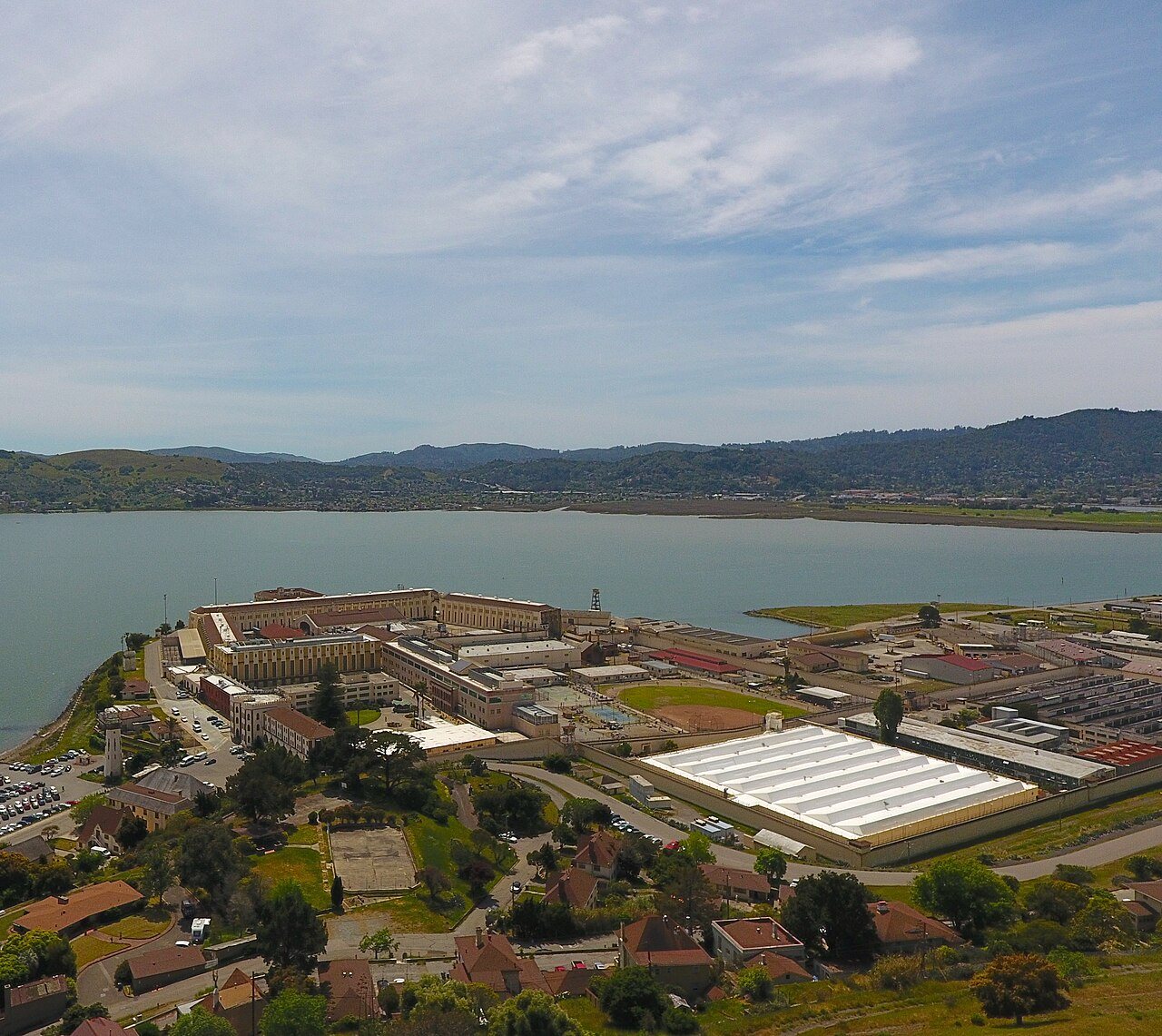
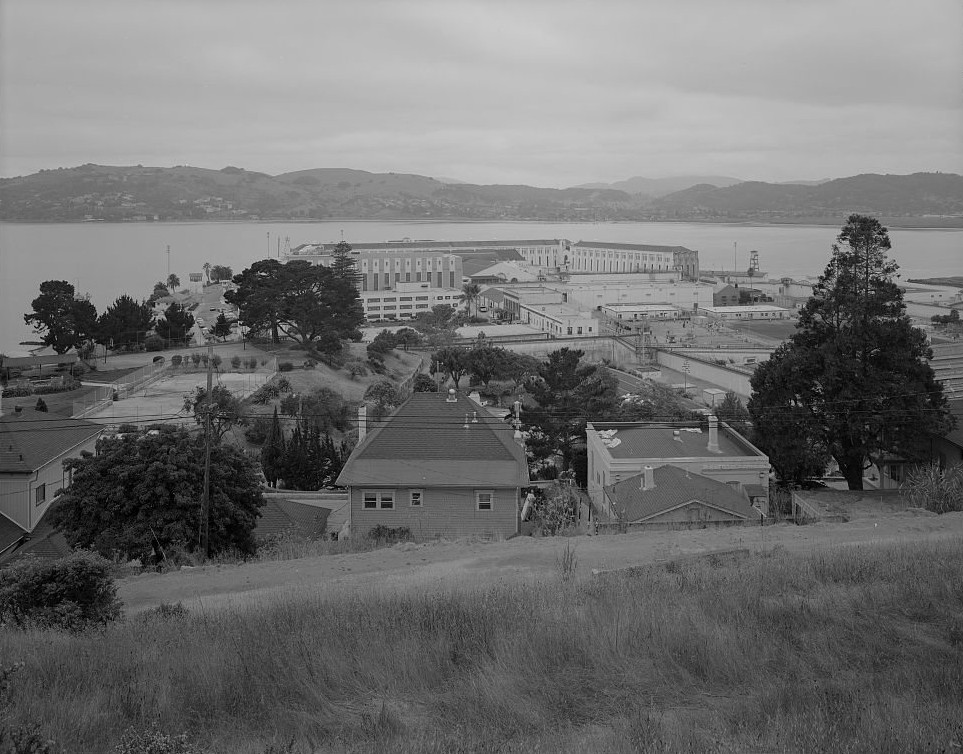
San Quentin seen from the hill above it. Historic American Buildings Survey, Library of Congress Prints & Photographs Division, no known restrictions
California has carried out 13 executions since 1978, the last in January 2006. Newsom shut the execution chamber in 2019. The men of the condemned row were moved out, most of them by 2024, to prisons from Pelican Bay to Calipatria, and the state renamed the place San Quentin Rehabilitation Center. East Block, 528 single cells, was left empty on the bay with the state deciding whether to renovate it or knock it down. The last I can find, nobody had settled that.
Enjoyed this story?Get a new one every day on social.