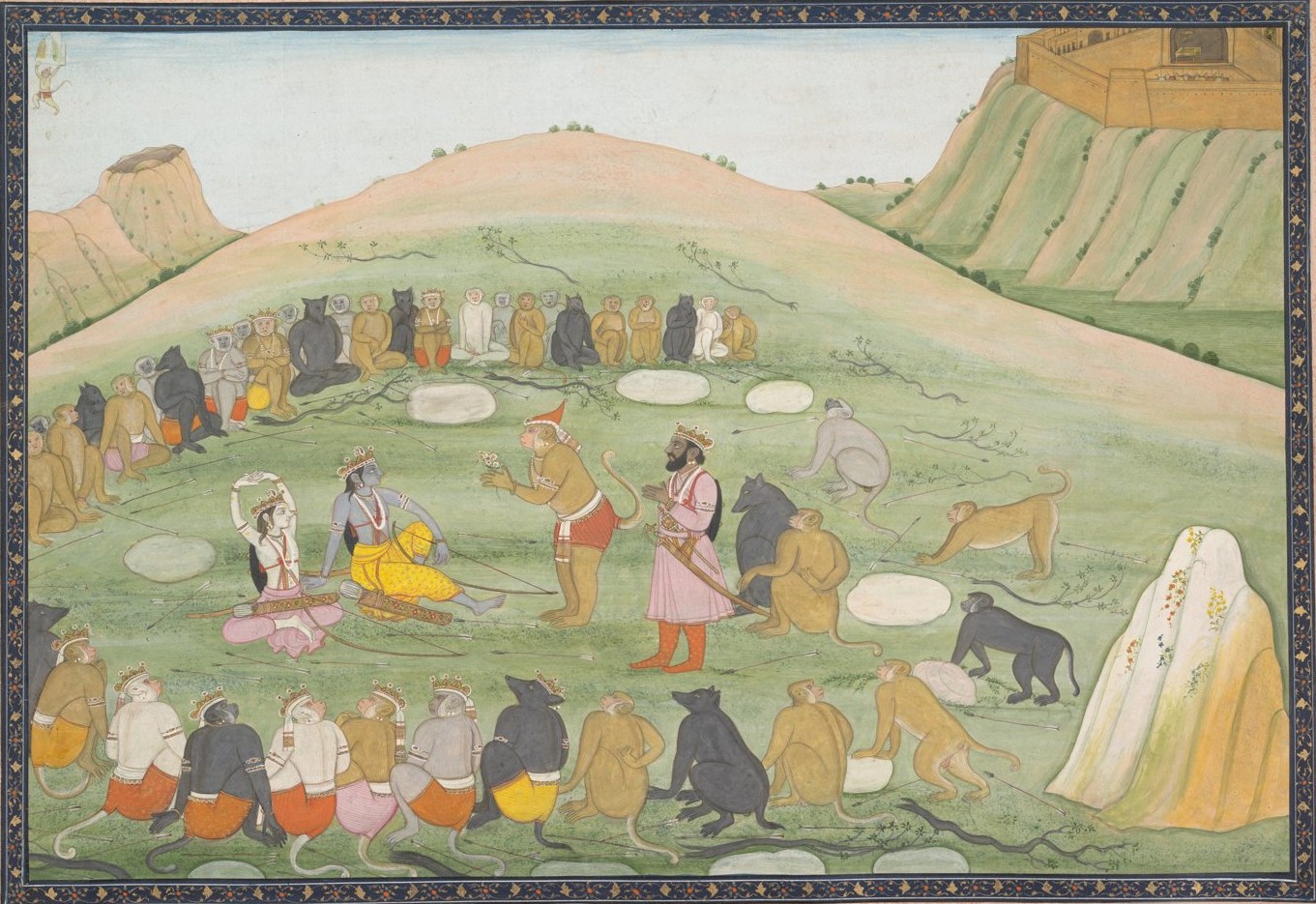
Nainsukh, Hanuman Revives Rama and Lakshmana with Medicinal Herbs, folio from a dispersed Ramayana series (ca. 1790), The Metropolitan Museum of Art, CC0
At 9:30 on the morning of Sunday 25 January 1987, a good part of India sat down in somebody else's front room. Television sets were scarce and colour ones expensive, so people went to the neighbour who had one. On the screen, on the only channel the country had, was the first episode of Ramanand Sagar's Ramayan, with wobbly trick photography, a loud score and costumes out of a Bombay studio.
It ran for 78 Sundays. This week Nitesh Tiwari's Ramayana: Part 1 opened worldwide, with Ranbir Kapoor as Rama, Sai Pallavi as Sita and Yash as Ravana, and took around 128 crore rupees on its first day. I have no doubt it looks better. I would be surprised if it does what the old one did.
A very long epic on a state channel
Sagar was a Hindu from Lahore who had settled in Bombay after Partition and made his name in Hindi films. His serial was contracted for 52 episodes, was extended three times, and did not finish until 31 July 1988. Each episode reportedly cost nine lakh rupees, the most of any Indian show at the time, and brought Doordarshan about 40 lakh. Toothpaste, noodles and textiles paid the bills.
What is odd is that it was allowed at all. The Indian state had a long-standing policy of not promoting one faith, and in late 1986 Rajiv Gandhi's information minister, Ajit Kumar Panja, approved it anyway. Jawhar Sircar, who later ran Prasar Bharati, the body that supervises Doordarshan, wrote that he could not establish why, even from that chair. "Not everything is noted in the files," he said, and I find that the most honest sentence ever written about a government broadcaster.
Brides, ministers and a train
The stories from those Sundays have the slightly polished feel of stories told many times, and I would not swear to every one. The accounts have brides refusing to go through wedding rites until the episode ended, ministers late for their own swearing-in, and a train held while the driver and passengers watched. Buses and trains are also said to have stopped so that people could crowd around roadside sets, though the scholar Arvind Rajagopal notes that those crowds often could neither see nor hear anything.
The numbers are estimates and they do not agree: 80 to 100 million for a peak audience, 82 or 85 percent of viewers. The smaller details convince me more. Arun Govil, who played Rama, reportedly stopped smoking in public because fans could not bear to see their god with a cigarette. Deepika Chikhlia, who played Sita, told Mark Tully of the BBC that grown adults touched her feet at functions. The filmmaker Abhijeet Deshpande remembers that Sunday was the meat day in his family, and that his parents would stop cleaning the meat during the ad breaks.
The serial was supposed to end with Rama's coronation, leaving out the last book. Sanitation workers who identify as Balmiki, after Valmiki, the epic's traditional author, went on strike until Sagar agreed to film it. That is how a television audience gets a sequel called Luv Kush.
The state had put a god on air
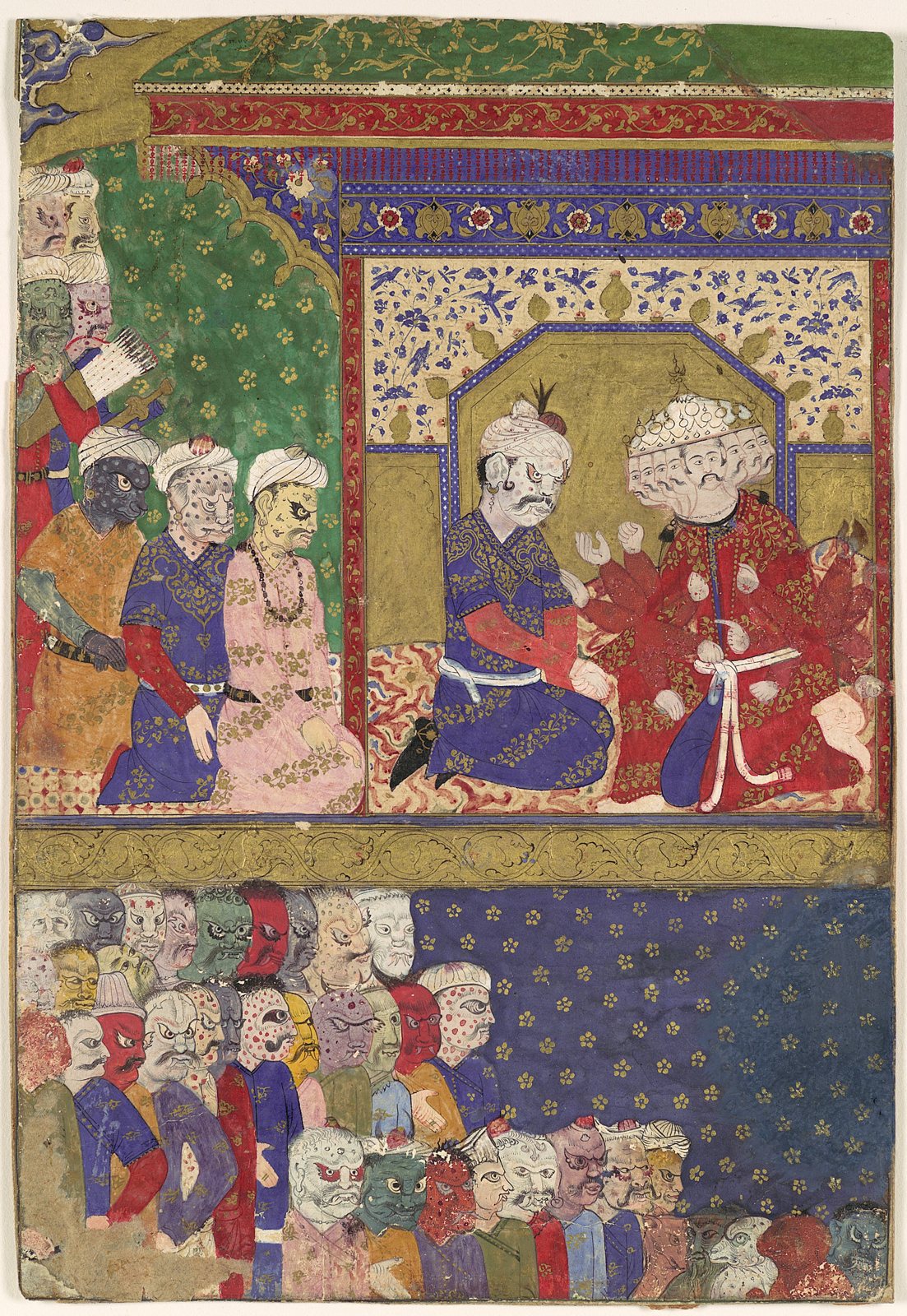
Folio showing the demon king Ravana in his court, from a Ramayana manuscript. "The Court of Ravana", folio from a Ramayana (ca. 1605), The Metropolitan Museum of Art, CC0
Not everybody was charmed. South Indian intellectuals thought it kitsch, and critics noted that the north Indian telling was going out as the national one, in a country where some 15 percent of people were not Hindu. Tully also recorded fan letters from Christians, Muslims and Sikhs, so the audience was wider than the argument suggests.
Rajagopal's judgment is that the government "violated a decades-old taboo on religious partisanship", and that Hindu nationalists walked through the opening. In November 1989 the campaign for a temple at Ayodhya held its foundation ceremony at the disputed site. In the autumn of 1990 L.K. Advani crossed the country on his Ram Rath Yatra, and police firings and riots left hundreds dead. How much of that the serial caused is an argument I cannot settle, and neither can anyone else, but three of its cast (Chikhlia, Govil and Arvind Trivedi, who played Ravana) went on to sit as BJP members of parliament. That is an unusual career path for a soap opera.
Thirty-three years later, in lockdown
The serial's last surprise came in March 2020. Days after Narendra Modi ordered a national lockdown, the information minister announced that Ramayan would return to Doordarshan, by public demand. On 16 April the channel said 77 million people had watched in a single day.
Tiwari's film has an answer to all of this, of a kind. In a corner of the cast list Arun Govil, now in his seventies and a sitting MP, plays Dashrath, Rama's father. It is a graceful nod, and I think it is the shrewdest thing the producers did, because the new Ramayana will out-earn the old one many times over and will never make anyone hold a train.
Enjoyed this story?Get a new one every day on social.